Frozen Shoulder Physiotherapy in South Delhi
Frozen shoulder, medically known as adhesive capsulitis, is a painful condition that causes progressive stiffness and restricted movement in the shoulder. Everyday activities such as lifting the arm, reaching behind the back, dressing, combing the hair, or sleeping on the affected side may become difficult.
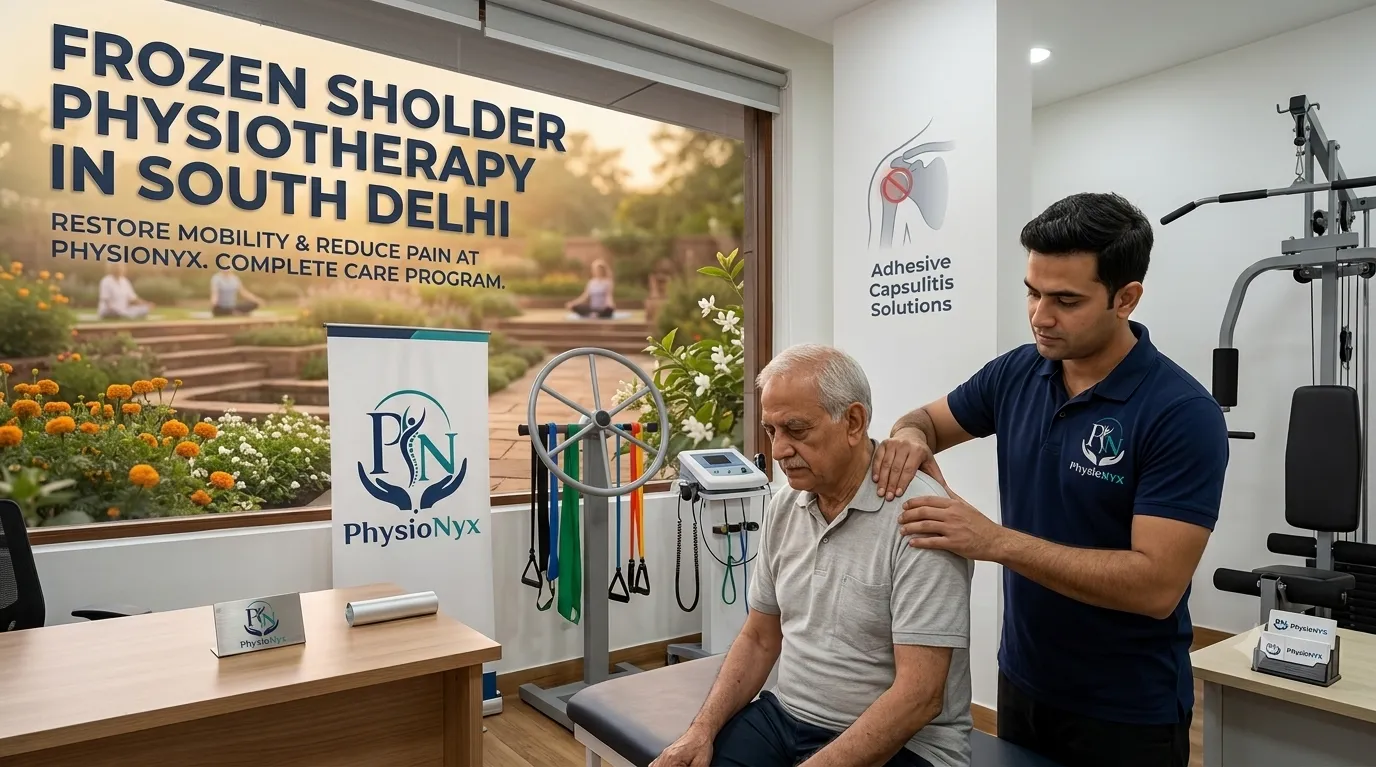
At Physionyx Physiotherapy & Rehab, Dr. Niraj Kumar provides personalised physiotherapy for frozen shoulder, focusing on pain management, gradual improvement in shoulder mobility, and restoration of functional movement.
What Is Frozen Shoulder?
Frozen shoulder develops when the connective-tissue capsule surrounding the shoulder joint becomes inflamed, thickened, and tight. This can lead to pain and loss of both active and passive shoulder movement. The condition may occur without an obvious cause or develop after injury, surgery, prolonged immobilisation, stroke, or other medical conditions.
Frozen shoulder is also associated with conditions such as diabetes and thyroid disorders, which may increase the risk of developing more persistent symptoms.
Common Symptoms
People with frozen shoulder may experience:
- Gradually increasing shoulder pain.
- Stiffness and difficulty moving the arm.
- Pain while reaching overhead or behind the back.
- Difficulty dressing, bathing, or combing the hair.
- Sleep disturbance due to shoulder pain.
- Reduced ability to lift, carry, or reach.
- Weakness caused by reduced shoulder use.
Symptoms commonly progress through painful, stiff, and recovery phases, although the pattern and duration can vary from person to person. Recovery may take several months or longer, making appropriate assessment and consistent rehabilitation important.mayoclinic
How Physiotherapy Helps
Physiotherapy at Physionyx may include:
- Detailed shoulder movement and functional assessment.
- Pain-relief strategies and activity modification.
- Gentle shoulder joint mobilisation.
- Stretching to improve shoulder-capsule flexibility.
- Active and assisted range-of-motion exercises.
- Scapular and posture exercises.
- Progressive rotator-cuff and shoulder strengthening.
- Guidance for safe home exercises.
- Functional training for reaching, dressing, lifting, and other daily tasks.
The treatment plan is adjusted according to the patient’s stage of frozen shoulder, pain level, movement restriction, medical history, and response to treatment. Physical therapy focused on restoring shoulder flexibility is a primary treatment approach for frozen shoulder.orthoinfo
Physionyx Treatment Approach
At Physionyx Physiotherapy & Rehab, treatment is not based on forcing the shoulder through painful movement. Dr. Niraj Kumar uses a gradual, patient-focused approach to reduce stiffness and improve movement safely.
The programme may combine manual therapy, therapeutic exercise, posture correction, soft-tissue techniques, and education about activity pacing. Patients are guided on how to continue appropriate exercises at home while avoiding movements that significantly aggravate pain or inflammation.
The aim is to help patients regain useful shoulder movement, return to daily activities, improve sleep comfort, and build confidence in using the affected arm.
When to Seek Assessment
Consider a physiotherapy assessment if shoulder pain or stiffness:
- Continues for more than a few days.
- Progressively limits movement.
- Interferes with sleep or work.
- Makes dressing or bathing difficult.
- Develops after surgery, injury, or prolonged rest.
- Is associated with diabetes or thyroid disease.
Shoulder pain can have several causes, including rotator-cuff problems, arthritis, bursitis, or nerve-related conditions. A proper clinical assessment is important before beginning treatment.
Frequently Asked Questions
Can physiotherapy cure frozen shoulder?
Physiotherapy can help reduce pain, improve flexibility, restore movement, and support functional recovery. The pace of improvement varies, and some patients may require medical treatment such as medication or injection in addition to physiotherapy.
Should I exercise if my shoulder hurts?
Gentle, prescribed movement may be helpful, but exercises should not be forced or performed aggressively. Your physiotherapist can guide you on the appropriate intensity and repetitions for your condition.
How long does frozen shoulder take to improve?
Recovery varies considerably. Frozen shoulder often improves gradually, but symptoms may persist for one to three years in some cases.
Can frozen shoulder happen after surgery or injury?
Yes. Reduced shoulder movement after surgery, injury, fracture, or prolonged immobilisation can contribute to secondary frozen shoulder.
Is surgery always required?
No. Many patients improve with non-surgical care, including physiotherapy and medical management. Surgery or other procedures may be considered when symptoms remain severe despite appropriate conservative treatment
Book an Assessment
If you are searching for frozen shoulder physiotherapy in South Delhi, contact Physionyx Physiotherapy & Rehab for an individual assessment and treatment plan. Dr. Niraj Kumar can evaluate your shoulder movement, pain, stiffness, and daily limitations and guide you through a safe, progressive rehabilitation programme.
Keywords