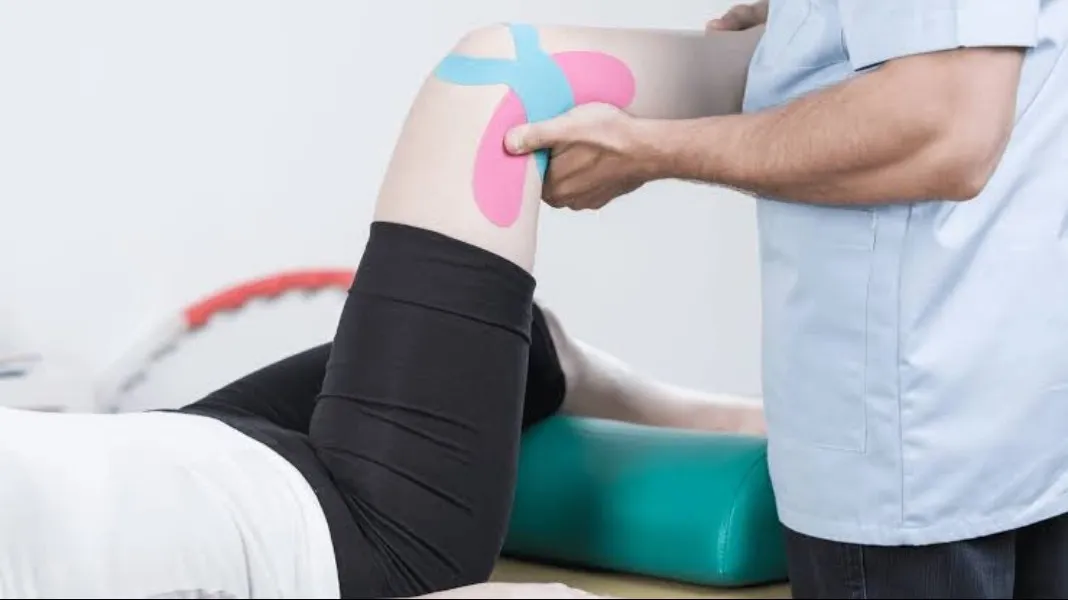
Post-Knee Replacement Rehabilitation Protocol
Knee replacement surgery can reduce pain and improve movement, but surgery is only one part of recovery. A structured rehabilitation programme helps the patient safely regain knee movement, activate weakened muscles, improve walking, manage swelling, and return to daily activities.
At Physionyx Physiotherapy & Rehab, post-knee replacement rehabilitation is planned according to the patient’s age, surgical procedure, medical history, pain level, swelling, muscle strength, knee movement, walking ability, and surgeon’s instructions. The following phase-wise guide explains what patients may generally expect; it is not a substitute for an individual clinical assessment.
Why Rehabilitation Matters
After knee replacement, the muscles around the knee—particularly the quadriceps—may become weak or difficult to activate. Pain, swelling, limited movement, fear of putting weight through the leg, and prolonged bed rest can further affect walking and independence.
Physiotherapy helps patients progressively work on:
- Knee bending and straightening.
- Quadriceps and hamstring activation.
- Hip and ankle strength.
- Safe transfers and walking.
- Stair negotiation.
- Balance and coordination.
- Swelling and pain management.
- Confidence with daily movement.
- Long-term joint protection.
Early, progressive rehabilitation is commonly used after total knee arthroplasty to restore mobility, muscle function, and daily activity. However, the speed of progression must be guided by healing, symptoms, surgical advice, and individual response.
Before Rehabilitation Begins
Before starting or progressing exercises, the physiotherapist reviews:
- Type of knee replacement performed.
- Date of surgery.
- Surgeon’s precautions and weight-bearing instructions.
- Wound and scar condition.
- Pain, swelling, bruising, or warmth.
- Knee flexion and extension.
- Quadriceps activation.
- Ability to sit, stand, transfer, and walk.
- Use of a walker, crutches, or cane.
- Medical conditions such as diabetes, heart disease, or osteoporosis.
- Home environment, stairs, bathroom safety, and caregiver support.
The rehabilitation plan may be modified if the patient has delayed wound healing, infection concerns, excessive swelling, blood-clot risk, severe pain, dizziness, or other medical complications.
Phase One: Protection and Early Mobility
Usual timeframe: Surgery day to approximately two weeks
The first phase begins in the hospital or soon after discharge. The primary aim is to protect the surgical area while safely restoring essential movement.
Main goals
- Control pain and swelling.
- Protect the wound and healing tissues.
- Prevent complications of prolonged immobility.
- Achieve safe bed mobility and transfers.
- Begin standing and walking with the prescribed aid.
- Activate the quadriceps and other leg muscles.
- Improve gentle knee extension and flexion.
- Teach safe home positioning and movement.
Common physiotherapy activities
Depending on the surgeon’s instructions, early rehabilitation may include:
- Ankle pumps to encourage lower-limb circulation.
- Deep breathing and supported coughing when appropriate.
- Quadriceps-setting exercises.
- Gluteal contractions.
- Gentle heel slides.
- Supported knee extension.
- Straight-leg raising once adequate quadriceps control is present.
- Bed mobility and sitting practice.
- Sit-to-stand training.
- Short walks with a walker or crutches.
- Basic stair instruction if required for discharge.
- Leg elevation and cold therapy as advised.
The patient should not force the knee into a painful range or place additional load on the joint without guidance. Early walking is usually short and frequent rather than long and exhausting.
Patient priorities
During this phase, patients should focus on:
- Taking medication exactly as prescribed.
- Keeping the wound clean and protected.
- Completing only the exercises advised by the medical team.
- Using the walking aid correctly.
- Avoiding sudden twisting or pivoting.
- Taking regular movement breaks rather than remaining in bed all day.
- Keeping essential items within easy reach.
- Using a stable chair with suitable height and arm support.
Phase Two: Movement and Functional Recovery
Usual timeframe: Approximately two to six weeks
During this phase, the patient gradually becomes more independent with walking and daily activities. The emphasis shifts from basic protection to improving knee movement, leg strength, gait quality, and functional confidence.
Main goals
- Reduce dependence on walking aids when safe.
- Improve knee bending and achieve comfortable extension.
- Increase quadriceps and hip strength.
- Improve walking pattern.
- Manage stairs more confidently.
- Improve standing tolerance.
- Resume basic household activities.
- Reduce fear of movement.
- Build consistency with home exercises.
Physiotherapy may include
- Progressed heel slides and active knee movement.
- Quadriceps and hamstring strengthening.
- Hip abductor and gluteal exercises.
- Supported mini-squats.
- Sit-to-stand repetitions.
- Step-up practice.
- Gait training on level surfaces.
- Balance exercises with appropriate support.
- Stationary cycling when medically appropriate.
- Scar and soft-tissue care after the wound has healed and with clinical approval.
- Functional practice such as reaching, dressing, and carrying light objects.
The patient may still experience swelling after activity. A temporary increase in swelling does not always indicate harm, but persistent worsening pain, marked warmth, redness, fever, wound discharge, or calf pain requires medical review.
Walking-aid progression
A walker, crutches, or cane should not be abandoned simply because the patient wants to walk unaided. The physiotherapist assesses:
- Leg strength.
- Knee control.
- Balance.
- Walking symmetry.
- Confidence.
- Ability to manage turns and uneven surfaces.
- Risk of falling.
A walking aid is reduced when the patient can walk safely and with reasonable control—not according to a fixed calendar.
Phase Three: Strength, Balance, and Independence
Usual timeframe: Approximately six to twelve weeks
By this stage, many patients are working toward more efficient walking, better stair control, improved endurance, and greater independence. Recovery remains individual, and some patients need longer before progressing to advanced exercises.
Main goals
- Improve strength around the knee, hip, and ankle.
- Develop better balance and proprioception.
- Improve walking speed and endurance.
- Practise stairs and community mobility.
- Resume most routine household activities.
- Improve confidence on different surfaces.
- Build a sustainable exercise routine.
Possible rehabilitation activities
- Progressive resistance exercises.
- Sit-to-stand from different chair heights.
- Step-ups and controlled step-downs.
- Supported squats within a safe range.
- Stationary cycling.
- Walking-duration progression.
- Balance and weight-shifting exercises.
- Functional reaching and lifting.
- Gentle resistance-band exercises.
- Core and trunk conditioning.
- Low-impact endurance training.
- Practice on ramps or varied surfaces where appropriate.
The aim is not simply to achieve a particular number of degrees of knee movement. Useful recovery also includes safe walking, adequate muscle control, stair ability, confidence, and the ability to complete meaningful daily tasks.
Phase Four: Advanced Function and Long-Term Conditioning
Usual timeframe: Approximately three to six months and beyond
The final phase focuses on maintaining progress and returning to appropriate recreational, household, and work-related activities. Some patients may continue to improve beyond six months, particularly when strength, balance, flexibility, and endurance require further development.
Main goals
- Maintain knee movement.
- Improve lower-limb strength and endurance.
- Restore efficient gait.
- Return to selected low-impact activities.
- Improve confidence outdoors and in the community.
- Protect the replaced joint through lifelong conditioning.
- Prevent avoidable falls and deconditioning.
Suitable activities may include
- Walking.
- Stationary or outdoor cycling when appropriate.
- Swimming after wound healing and medical clearance.
- Low-impact strengthening.
- Gentle fitness programmes.
- Selected forms of yoga or mobility exercise with modifications.
- Golf or similar recreational activities if cleared by the medical team.
High-impact jumping, running, repeated deep squatting, and activities with a high risk of falling may not be suitable for every patient. The appropriate activity level depends on the surgeon’s advice, implant considerations, strength, balance, and overall health.
Range of Motion and Progress
Patients often ask how much knee bending they should achieve and when. There is no single target that applies to every person. Required movement depends on body structure, daily needs, the opposite knee, work demands, stairs, sitting preferences, and the surgical outcome.
A rehabilitation plan generally gives attention to both:
- Knee extension: Straightening the knee is important for standing and walking efficiently.
- Knee flexion: Bending is important for sitting, stairs, dressing, cycling, and other activities.
Progress should be measured through function as well as joint angles. A patient who walks safely, manages stairs, sleeps better, and performs daily tasks may be progressing well even if recovery does not follow an exact numerical timeline.
Managing Pain and Swelling
Pain and swelling are common after knee replacement, particularly after exercises or increased walking. Physiotherapy may include education on:
- Activity pacing.
- Rest intervals.
- Leg elevation.
- Cold therapy when advised.
- Compression if prescribed.
- Gentle ankle movement.
- Appropriate exercise dosage.
- Safe positioning during sleep and rest.
- Gradual rather than sudden increases in walking.
Pain should be monitored rather than ignored. A useful principle is to increase activity gradually and observe how the knee responds later that day and the following morning.
Home Exercise Programme
Home exercises are an important part of recovery. A programme may include:
- Ankle pumps.
- Quadriceps activation.
- Heel slides.
- Knee extension practice.
- Straight-leg raises.
- Hip strengthening.
- Sit-to-stand practice.
- Step training.
- Walking practice.
- Balance work.
- Gentle flexibility exercises.
The exact exercises, repetitions, resistance, and frequency must be individualised. Performing more exercises than prescribed does not necessarily accelerate healing and may increase swelling or fatigue.
Stair Training
Stairs are often a major concern after surgery. Early stair training focuses on safety rather than speed.
Patients may initially be taught to:
- Use the handrail and prescribed walking aid.
- Place the stronger leg first while going up when instructed.
- Place the operated leg first while going down when instructed.
- Take one step at a time.
- Avoid carrying objects while using stairs.
- Keep the body facing forward.
- Avoid rushing or pivoting on the operated knee.
The physiotherapist will progress the pattern when strength, balance, and knee control improve.
Returning to Work and Driving
Return to work depends on the type of job, walking demands, sitting duration, travel requirements, strength, pain, medication, and medical clearance.
Driving should be resumed only when the surgeon or treating medical professional confirms that the patient can safely control the vehicle, perform an emergency stop, enter and exit comfortably, and is no longer impaired by medication or restricted movement. The operated side, vehicle type, and local regulations may also affect the decision.
Common Mistakes to Avoid
- Doing too much walking too soon.
- Ignoring swelling after exercise.
- Stopping exercises once pain decreases.
- Using a walking aid incorrectly.
- Walking with a limp for prolonged periods.
- Twisting suddenly while the foot is fixed.
- Sitting for very long periods without movement.
- Starting high-impact exercise without clearance.
- Comparing recovery with another patient.
- Missing follow-up appointments.
- Applying heat or massage over a healing wound without advice.
- Continuing an exercise that causes sharp pain or instability.
Warning Signs Requiring Medical Attention
Contact the surgeon or seek urgent medical assessment for:
- Fever or chills.
- Increasing redness, heat, or discharge around the wound.
- Sudden severe increase in pain or swelling.
- Calf pain, marked calf swelling, or unusual tenderness.
- New chest pain or unexplained breathlessness.
- Sudden loss of movement or inability to bear weight.
- Repeated buckling or a feeling that the knee has become unstable.
- New numbness, weakness, or change in foot colour.
- Wound opening or bleeding that does not settle.
A blood clot, infection, wound problem, or other postoperative complication requires medical management and should not be treated as routine exercise soreness.
How Physionyx Can Help
At Physionyx Physiotherapy & Rehab, post-knee replacement rehabilitation is designed around the patient’s actual needs rather than a rigid timetable. Dr. Niraj Kumar may assess:
- Pain and swelling.
- Knee range of motion.
- Quadriceps and lower-limb strength.
- Walking pattern.
- Balance and fall risk.
- Transfer and stair ability.
- Home and work demands.
- Use of walking aids.
- Progress toward personal goals.
Treatment may combine therapeutic exercise, gait training, balance work, mobility exercises, functional practice, manual techniques when appropriate, and patient education. The plan is reviewed as the patient improves.
Frequently Asked Questions
When should physiotherapy start after knee replacement?
Rehabilitation often begins during the hospital stay or soon after surgery, depending on the surgical team’s instructions and the patient’s medical stability. Early care usually focuses on safe movement, transfers, walking, swelling management, and muscle activation.
How long does knee replacement rehabilitation take?
Many patients continue structured rehabilitation for several weeks to months, but the timeline varies. Recovery depends on pre-surgery strength, age, medical conditions, pain, swelling, surgical findings, motivation, home support, and complications.
Is pain during exercise normal?
Mild exercise-related discomfort can occur, but sharp pain, sudden pain, significant instability, or steadily worsening symptoms should be reported. The exercise dosage may need to be adjusted.
Should I use ice after exercise?
Cold therapy may help some patients manage postoperative swelling, but it should be used according to the surgeon’s or physiotherapist’s instructions. Protect the skin and avoid placing cold directly over an area with reduced sensation or an unhealed wound.
How much walking should I do?
Walking should begin at a safe level and increase gradually. Short, frequent walks are often more manageable than one long walk, but the correct amount depends on medical advice, pain, swelling, strength, and walking quality.
When can I stop using a walker or cane?
The decision should be based on safe balance, adequate leg control, walking quality, and confidence. Stopping too early may lead to limping or falls.
Can I bend my knee fully after replacement?
Many patients improve knee bending substantially, but the final range varies. The goal is functional movement appropriate for your daily needs, not necessarily the same range as an unaffected knee.
Can I kneel after knee replacement?
Some patients can kneel, while others find it uncomfortable or are advised to avoid it. Ask your surgeon and physiotherapist before practising kneeling, particularly during early healing.
Can physiotherapy prevent a stiff knee?
A consistent, appropriately progressed rehabilitation plan can help address pain, swelling, weakness, and restricted movement. Persistent or rapidly worsening stiffness should be reviewed by the treating medical team.
Book an Assessment
If you are recovering from knee replacement surgery and need physiotherapy in South Delhi or New Delhi, contact Physionyx Physiotherapy & Rehab for an individual rehabilitation assessment. A personalised phase-wise plan can help you understand what to work on now, how to progress safely, and how to return to the activities that matter to you.
Keywords