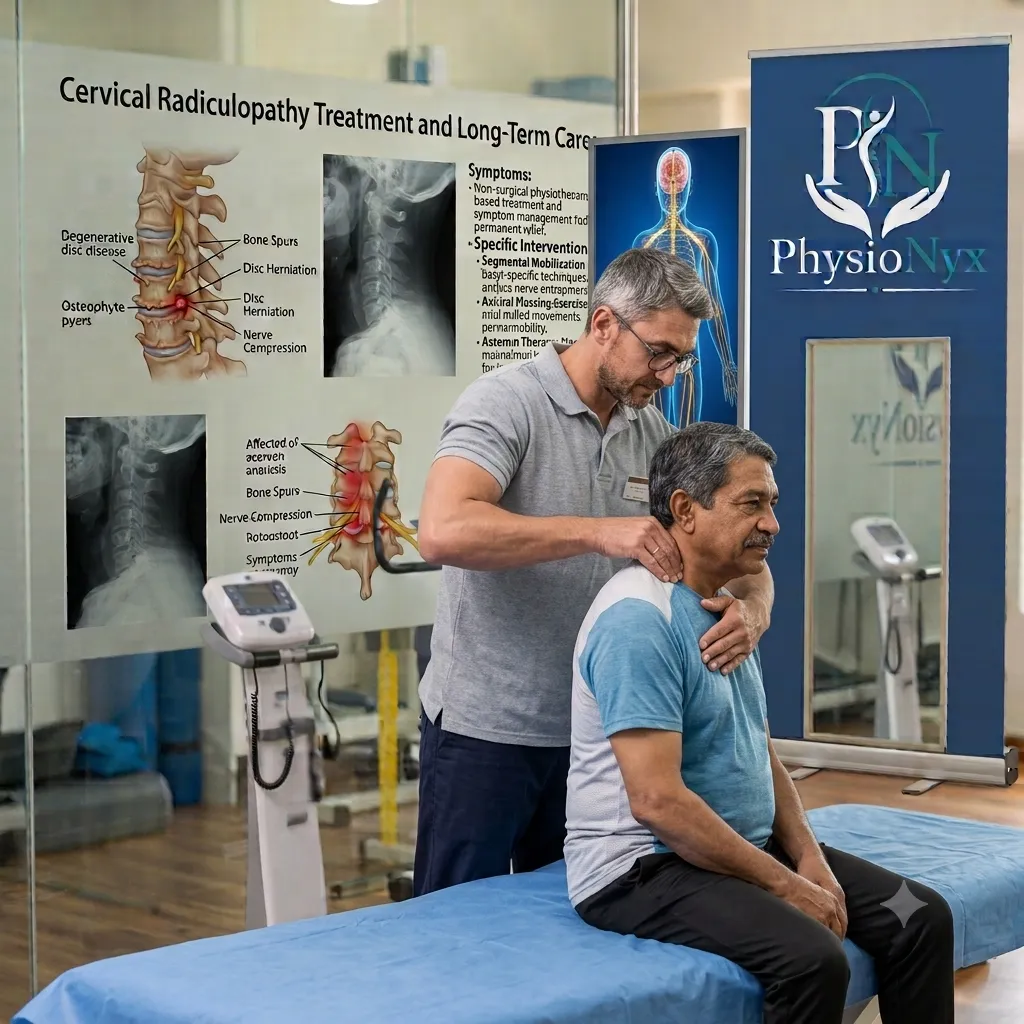
Cervical Radiculopathy Holding You Back? Expert Physiotherapy Can Help
Cervical radiculopathy, often called a pinched nerve in the neck, can cause pain that travels from the neck into the shoulder, arm, or hand. It may start as neck stiffness or discomfort, then progress to tingling, numbness, weakness, or sharp shooting pain. For many people, it becomes difficult to work, drive, sleep, or even hold a phone comfortably.
If you are searching for cervical radiculopathy treatment in South Delhi or want a trusted physiotherapist near me, the right treatment can help reduce nerve irritation, improve movement, and restore daily function. At Physionyx, the focus is not just on pain relief, but also on correcting the movement, posture, and muscle imbalances that may be contributing to the problem.
What is cervical radiculopathy?
Cervical radiculopathy happens when one of the nerves in the neck becomes irritated or compressed. This may occur due to a disc problem, age-related changes in the spine, inflammation, poor posture, repetitive strain, or narrowing around the nerve exit points. When the nerve is affected, symptoms can travel beyond the neck and into the arm or hand.
This condition is common in people who spend long hours at a desk, use mobile phones frequently, drive for long periods, or have repetitive upper-body strain. Some patients first notice neck pain, while others feel arm symptoms first. In many cases, the pain is sharp, burning, or electric-like, which is why it is often described as a “pinched nerve.”
Common symptoms
People with cervical radiculopathy may notice one or more of the following symptoms:
- Neck pain that spreads to the shoulder or arm.
- Tingling or numbness in the arm, forearm, or fingers.
- Weakness in the arm or hand.
- Pain that worsens with certain neck positions.
- Burning, shooting, or electric pain.
- Difficulty lifting objects or gripping firmly.
- Pain when looking up, turning the head, or sitting for long hours.
- Sleep disturbance because of neck or arm discomfort.
The exact pattern of symptoms depends on which nerve root is affected. That is why proper assessment is important before starting exercises or treatment.
Why physiotherapy helps
Physiotherapy is one of the most effective conservative treatments for cervical radiculopathy. The goal is to reduce pressure on the irritated nerve, improve neck mobility, calm pain, and strengthen the muscles that support the cervical spine and upper back.
A physiotherapist may evaluate posture, neck motion, nerve involvement, muscle strength, and daily habits before planning treatment. In many cases, a combination of pain-relief techniques, posture correction, gentle mobility work, strengthening, and nerve gliding exercises can help reduce symptoms and improve function.
How expert physiotherapy can help
A structured physiotherapy plan may include:
- Gentle pain-relief techniques.
- Manual therapy to improve neck and upper back mobility.
- Posture correction for sitting, standing, and working.
- Nerve glide or nerve mobility exercises when appropriate.
- Stretching for tight neck, shoulder, and chest muscles.
- Strengthening exercises for deep neck muscles and scapular stabilizers.
- Advice on workstation setup and daily movement habits.
- Home exercise guidance to maintain progress.
In some people, even simple changes such as improving sitting posture, reducing long uninterrupted screen time, and using the right exercise sequence can significantly reduce nerve irritation.
What makes it worse
Cervical radiculopathy often becomes more painful when daily habits continue to overload the neck. Common triggers include:
- Long hours of sitting without breaks.
- Looking down at a phone for too long.
- Poor workstation posture.
- Sleeping with poor neck support.
- Heavy lifting or sudden pulling movements.
- Repeated twisting or overhead work.
- Weak upper back and neck muscles.
This is why treatment is not only about exercises in the clinic. It is also about changing the way the neck is used throughout the day. Small corrections often make a big difference in long-term recovery.
Who should seek treatment
You should consider physiotherapy if you have neck pain along with arm pain, tingling, numbness, or weakness. It is especially important if the symptoms are affecting sleep, work, driving, or your ability to use the arm normally.
Many patients search for cervical radiculopathy physiotherapy in South Delhi, pinched nerve in neck treatment, or neck pain and arm pain relief because they want practical help from a nearby clinic. Regular treatment becomes easier when the clinic is close to home, and consistency usually improves results.
Why early treatment matters
Waiting too long can allow pain, stiffness, and nerve irritation to continue. Early physiotherapy can help reduce symptoms before the condition becomes more limiting. It can also prevent unnecessary fear by helping patients understand which movements are safe and which positions should be modified for now.
For many people, the biggest goal is simple: to get back to normal work, sleep, and daily activities without constant arm or neck pain. That is exactly where a good rehabilitation plan helps.
Why choose Physionyx
At Physionyx, cervical radiculopathy care is based on experience, careful assessment, and patient-focused treatment. Every case is different, so the rehabilitation plan should match the actual symptoms, nerve involvement, posture, and lifestyle factors.
If you are looking for cervical radiculopathy treatment in South Delhi, expert physiotherapy can help reduce pain, restore movement, and improve confidence in daily life. With the right approach, many patients are able to return to routine activities more comfortably.
FAQ
Can physiotherapy help cervical radiculopathy?
Yes. Physiotherapy can help reduce pain, improve mobility, and decrease pressure on the irritated nerve through a structured plan.
Is cervical radiculopathy the same as neck pain?
No. Neck pain is general pain in the neck, while cervical radiculopathy involves nerve irritation that may also cause arm pain, tingling, numbness, or weakness.
Do I need exercises at home?
Yes. Home exercises are usually an important part of recovery and long-term improvement.
Should I avoid all movement?
No. In most cases, guided movement is better than complete rest, but exercises should be prescribed correctly.
Final Note
Cervical radiculopathy can affect much more than just the neck. It can interfere with work, sleep, and daily function, especially when pain travels into the arm or hand. With expert physiotherapy, many patients can reduce symptoms, improve movement, and get back to life with more comfort and control.
Keywords