Locked-In Syndrome: Trapped But Aware — And the Pivotal Role Physiotherapy Plays
Imagine being fully conscious, fully aware of everyone and everything around you, hearing every word your family says — but unable to move a single muscle or speak. This is the reality of locked-in syndrome (LIS), one of the rarest and most misunderstood conditions in neurology. If you or a loved one in South Delhi has recently been given this diagnosis after a stroke or brain injury, you are likely searching for answers — what it means, what recovery looks like, and most importantly, what can actually be done. At Physionyx Physiotherapy & Rehab in Green Park, Dr. Niraj Kumar (MPT Neurology, 16 years of clinical experience) works with families navigating exactly this kind of complex neurological recovery.
What Is Locked-In Syndrome?
Locked-in syndrome occurs when damage to a specific part of the brainstem — the ventral pons — cuts off the connection between the brain and the body's muscles, while leaving the parts of the brain responsible for thinking, memory, and awareness completely intact. The result is near-total paralysis of the limbs, trunk, and face (quadriplegia), along with an inability to speak (anarthria) — yet the person can usually still move their eyes vertically and blink. This combination is why LIS is often described as 'trapped but aware.'
The most common cause is a brainstem stroke — either a blood clot or a bleed affecting the basilar artery — though it can also result from traumatic brain injury, brainstem tumours, infections, or demyelinating disorders. It is a rare condition, and every case can look slightly different depending on how much of the brainstem is affected — some patients retain a little more movement than others, which doctors classify as classic, incomplete, or total locked-in syndrome.
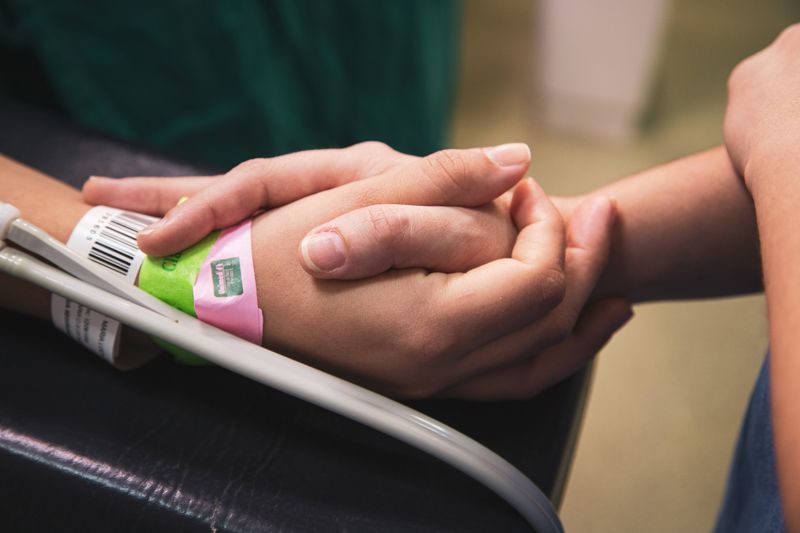 A careful neurological assessment — including eye-movement response — is the first step before building a locked-in syndrome rehabilitation plan.
Why Physiotherapy Plays Such a Pivotal Role
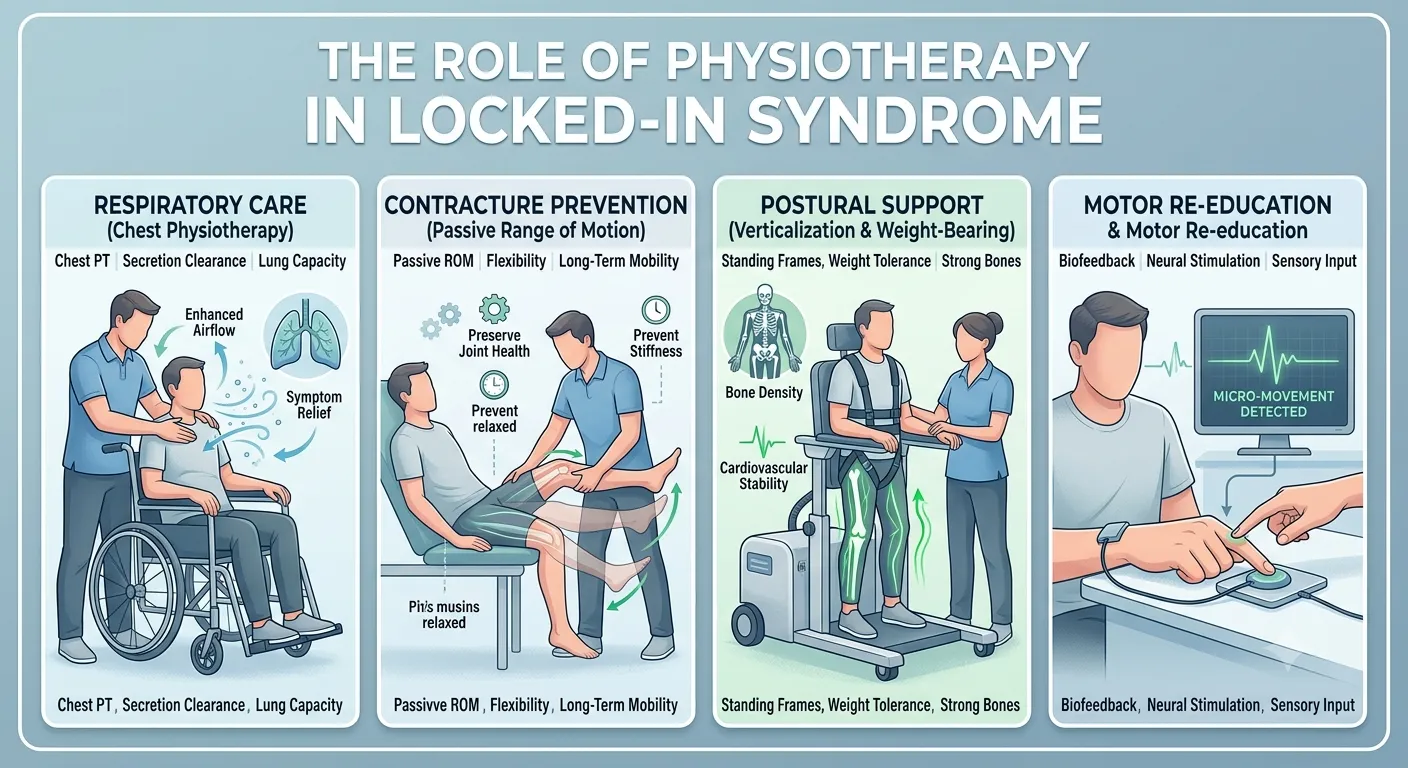
There is no single medication or surgery that reverses locked-in syndrome. Instead, outcomes depend heavily on early, consistent, specialised rehabilitation — and physiotherapy sits at the very centre of that care. Its role is not just about 'movement' in the traditional sense; it becomes essential to survival, comfort, and dignity:
- Preventing life-threatening complications: Immobility puts LIS patients at high risk of pneumonia, blood clots (DVT), and pressure sores. Chest physiotherapy — deep breathing techniques, postural drainage, and regular repositioning — helps protect the lungs and circulation.
- Preserving joints and muscles: Passive range-of-motion exercises, performed by the physiotherapist multiple times a day, prevent joints from stiffening (contractures) and help maintain whatever muscle tone remains.
- Correct positioning and seating: Careful positioning in bed and, over time, appropriate wheelchair fitting protects the skin, supports breathing, and allows the patient to be more comfortably included in family life.
- Supporting emerging movement: In incomplete LIS, some patients slowly regain small, purposeful movements — often starting with the head, neck, or a finger. Physiotherapy is what identifies and builds on these earliest signs of recovery through targeted, repetitive training that leverages the brain's neuroplasticity.
- Working hand-in-hand with communication: While speech therapists lead on building eye-blink or eye-gaze communication systems, physiotherapists support head and neck control that often makes these communication tools easier to use.
- Training the family: Perhaps the most underrated role — physiotherapists teach caregivers safe transfer techniques, positioning schedules, and home exercises, because in India, most day-to-day care ultimately happens at home with family support.
How Locked-In Syndrome Physiotherapy Is Approached at Physionyx
Care for locked-in syndrome is never one-size-fits-all, and it is never delivered by physiotherapy alone — it requires a multidisciplinary team involving the treating neurologist, physiotherapist, and where needed, a speech and language therapist. At Physionyx, Dr. Niraj Kumar begins with a detailed neurological assessment covering breathing pattern, joint mobility, skin integrity risk, and any early emerging movement, before building a structured plan that typically includes:
- Chest physiotherapy and breathing exercises to reduce respiratory complications
- A scheduled repositioning and passive movement routine to prevent pressure injuries and stiffness
- Gentle, graded active-assisted exercises wherever the patient shows any voluntary movement
- Trunk, neck, and head control training to support sitting tolerance and eventual wheelchair use
- Close coordination with family caregivers for safe daily handling and home-based continuation of therapy
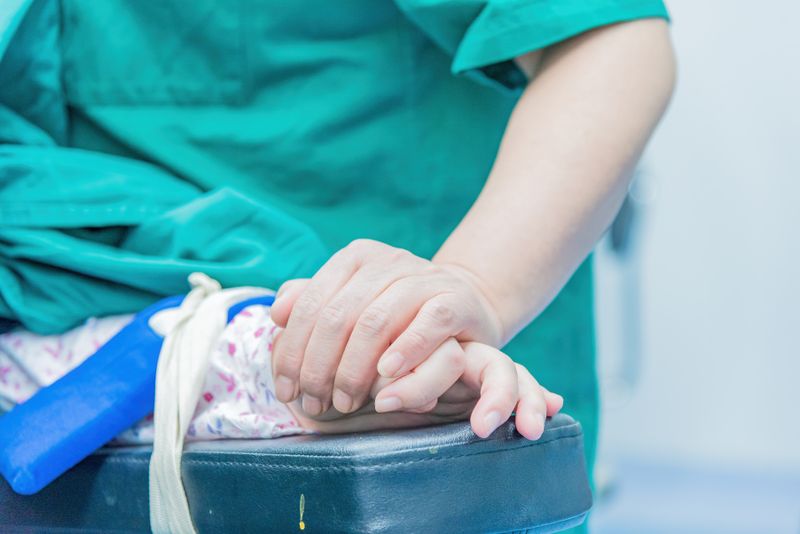 Family caregiver training is often as important as the clinical session itself in long-term locked-in syndrome care.
What Recovery Realistically Looks Like
It's important to be honest here: locked-in syndrome is a serious, life-altering condition, and complete recovery is uncommon. However, medical literature consistently shows that with early, specialised, and sustained rehabilitation, many patients do see improvements in comfort, communication, and in some cases, partial return of movement — particularly when incomplete LIS is diagnosed early and therapy begins promptly. Quality of life can improve meaningfully even without full motor recovery, especially when families are well-supported and involved. This is why an accurate, early diagnosis and a committed rehabilitation team matter so much.
Frequently Asked Questions
Can someone with locked-in syndrome fully recover?
Full recovery is rare. However, in cases of incomplete locked-in syndrome — where some voluntary movement remains — early and consistent physiotherapy can support meaningful gains in movement, comfort, and communication over time.
How soon after a brainstem stroke should physiotherapy begin?
As early as medically safe, once the patient is stable. Early intervention helps prevent complications like pneumonia and contractures, and gives the best chance of building on any early signs of recovering movement.
Can locked-in syndrome physiotherapy be done at home?
Yes, once the patient is medically stable, home-based physiotherapy — combined with caregiver training — is often an important part of ongoing management, alongside periodic clinical review.
Is locked-in syndrome the same as being in a coma?
No. This is one of the most important distinctions. Patients with locked-in syndrome are conscious and aware, unlike patients in a coma or vegetative state. This is why establishing a communication method early is so critical.
What other specialists are involved besides a physiotherapist?
Care usually involves a neurologist, physiotherapist, and speech-language pathologist at minimum, along with nursing and family caregivers — locked-in syndrome management is a team effort.
Get Specialised Neuro Physiotherapy Support in Green Park, South Delhi
If you're caring for a family member with locked-in syndrome or another severe neurological condition, you don't have to navigate it without guidance. Dr. Niraj Kumar (MPT Neurology) at Physionyx Physiotherapy & Rehab, Green Park, brings 16 years of experience in neuro and geriatric rehabilitation to help build a realistic, compassionate care plan for your loved one. Call 08048037133 or book a consultation today.
Keywords