Muscular Dystrophy: Specialized Physiotherapy to Support Movement and Function
Muscular dystrophy is more than just muscle weakness. It is a progressive condition that affects strength, mobility, posture, and independence. Over time, walking, standing, climbing stairs, lifting arms, and even simple daily tasks can become difficult. For patients and families, the biggest question is often the same: what can be done to maintain movement, strength, and quality of life?
Rehabilitation plays an important role. Expert physiotherapy can help people with muscular dystrophy preserve function, slow down the effects of inactivity, and adapt safely to daily challenges. If you are searching for muscular dystrophy physiotherapy in South Delhi or neuromuscular rehab near me, specialized care can make daily life more manageable.
What is muscular dystrophy?
Muscular dystrophy refers to a group of inherited conditions that cause gradual weakness and wasting of muscles. Different types affect different age groups and muscle regions. Some affect children, while others begin in adolescence or adulthood. The condition may involve the limbs, trunk, shoulders, hips, face, or other muscles depending on the type.
Many patients first search for terms like muscle weakness in legs, difficulty walking, trouble standing up, or progressive muscle loss because these are common early signs. Because muscular dystrophy varies from person to person, a careful physiotherapy assessment is important before treatment begins.
Common challenges patients face
People with muscular dystrophy may experience one or more of the following problems:
- Weakness in the legs, hips, shoulders, or arms.
- Difficulty walking, climbing stairs, or standing up.
- Trouble lifting arms above the head.
- Poor balance and reduced stability.
- Muscle tightness and joint stiffness.
- Postural changes and spinal curvature.
- Fatigue and reduced endurance.
- Difficulty with daily activities like dressing or bathing.
- Risk of falls.
- Breathing or chest expansion issues in some types.
These challenges can affect not only mobility but also confidence, independence, and family routine. Rehabilitation focuses on maximizing function within the patient’s current ability.
Why physiotherapy helps
Physiotherapy is one of the most important parts of muscular dystrophy management. The goal is not to reverse the condition, but to preserve movement, reduce stiffness, maintain joint flexibility, support safe mobility, and prevent avoidable complications.
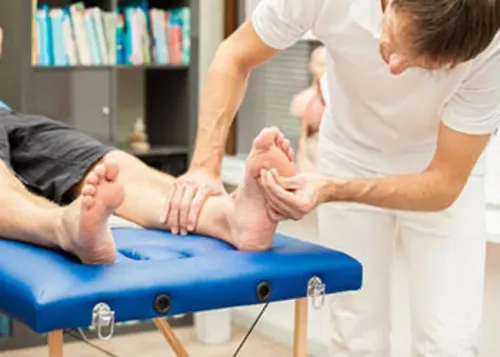
A physiotherapist may assess posture, walking pattern, muscle strength, balance, breathing support, and daily habits before designing a plan. In many cases, treatment includes gentle exercise, stretching, mobility work, and practical advice for daily activities.
How specialized physiotherapy can help
A structured physiotherapy program may include:
- Gentle range-of-motion exercises.
- Stretching to reduce tightness and contractures.
- Breathing and chest expansion exercises when needed.
- Strengthening for preserved muscle groups.
- Postural support and trunk control training.
- Balance and gait training when safe.
- Assistive device guidance (braces, walkers, wheelchairs).
- Home exercise program and caregiver training.
The right plan depends on the type of muscular dystrophy, the stage of progression, and the patient’s mobility level. Some patients need help mainly with walking and balance, while others need more support for transitions, wheelchair mobility, or breathing assistance.
Why early rehab matters
Starting physiotherapy early can help preserve movement and prevent secondary problems such as stiffness, joint tightness, and deconditioning. It can also help patients and families learn safe movement strategies and plan for future needs.
For many patients, the main goal is not just strength. It is better independence in daily life, safer mobility, and improved confidence. That is where a good rehabilitation plan can make a real difference.
How daily life can be supported
Physiotherapy for muscular dystrophy also focuses on practical support, such as:
- Safe transfer training (bed to chair, chair to standing).
- Posture management during sitting and lying.
- Fatigue management and energy conservation.
- Breathing support exercises.
- Advice on assistive devices and mobility aids.
- Family and caregiver education.
This helps patients stay active within their limits while reducing strain and risk of falls.
Who should seek treatment
You should consider physiotherapy if you or a family member has muscular dystrophy and is experiencing muscle weakness, reduced mobility, balance difficulty, breathing issues, or daily functional challenges. It is especially important if the weakness is affecting walking, standing, or self-care.
Many people search for muscular dystrophy physiotherapy in South Delhi, neuro rehab near me, or muscle weakness treatment Delhi because they want specialized help close to home. A local clinic also makes follow-up easier and helps patients stay consistent with their rehabilitation.
Why choose Physionyx
At Physionyx, muscular dystrophy care is based on experience, careful assessment, and individualized treatment. Every patient’s condition is different, so the rehabilitation plan should match the actual progression, mobility level, breathing needs, and lifestyle goals.
If you are looking for muscular dystrophy treatment in South Delhi or neuromuscular physiotherapy in Delhi, expert rehab can help you maintain function, improve mobility, and support better quality of life. With the right approach, many patients can feel more confident and capable in their daily routine.
FAQ
Can physiotherapy help muscular dystrophy?
Yes. Physiotherapy can help preserve movement, reduce stiffness, support mobility, and improve daily function.
Is muscular dystrophy reversible?
No. It is a progressive condition, but rehabilitation can help manage symptoms and maintain function longer.
Do I need exercises at home?
Yes. Home exercises are usually an important part of maintaining mobility and flexibility.
Should I push hard to build strength?
No. Overexertion can be harmful. Exercises should be gentle, safe, and prescribed by a qualified physiotherapist.
Final Note
Muscular dystrophy brings real challenges, but it does not mean rehabilitation stops. With expert physiotherapy, the right exercises, and practical daily support, many patients can preserve movement, reduce complications, and live more confidently.
Keywords