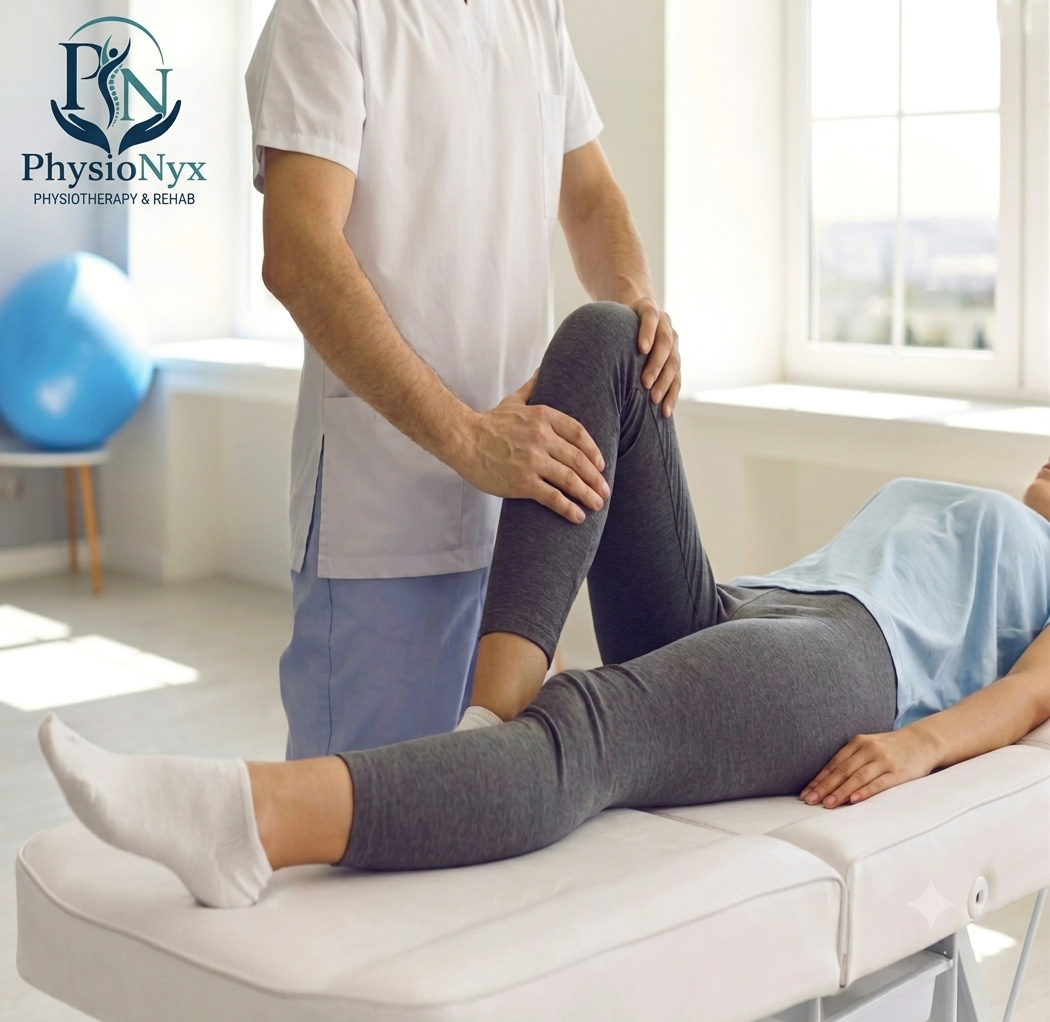
Physiotherapy After Ligament or Tendon Repair and Spinal Surgery
Physiotherapy after ligament or tendon repair and spinal surgery helps restore movement, strength, balance, walking ability, and independence. At Physionyx Physiotherapy & Rehab, Dr. Niraj Kumar can create a personalised rehabilitation plan based on the surgical procedure, healing stage, medical precautions, pain, mobility, and daily goals.
Ligaments connect bone to bone and provide joint stability, while tendons connect muscle to bone and help create movement. Repair or reconstruction must therefore be followed by carefully progressed rehabilitation to protect the healing tissue and restore function.
Ligament and Tendon Repair
Ligament or tendon surgery may be required after a complete tear, severe injury, failed conservative treatment, or significant loss of joint stability and function. Procedures may involve direct repair, reconstruction with a graft, tendon transfer, or fixation to bone.
Physiotherapy may help with:
- Pain and swelling management.
- Protection of the repair.
- Joint mobility.
- Muscle activation.
- Progressive strengthening.
- Balance and coordination.
- Walking or upper-limb function.
- Return to work, sport, and daily activities.
Spinal Surgery Rehabilitation
Spinal surgery may include procedures such as discectomy, decompression, laminectomy, or spinal fusion. Rehabilitation commonly focuses on safe mobility, posture, walking, strength, function, and gradual return to activities.[medlineplus]
Patients may experience:
- Back or neck pain.
- Muscle weakness.
- Stiffness.
- Reduced walking tolerance.
- Fear of movement.
- Difficulty changing position.
- Numbness or altered sensation.
- Reduced confidence with lifting or bending.
The programme must follow the surgeon’s instructions about bending, lifting, twisting, sitting, driving, and exercise.
Initial Assessment
The first physiotherapy assessment may include:
- Type and date of surgery.
- Surgical precautions.
- Pain and swelling.
- Wound and scar precautions.
- Joint or spinal movement.
- Muscle strength.
- Balance and coordination.
- Walking pattern.
- Nerve-related symptoms.
- Transfers.
- Use of braces or walking aids.
- Work and activity demands.
- Functional goals.
The assessment helps establish safe priorities and determine how quickly rehabilitation can progress.
Rehabilitation After Ligament or Tendon Repair
Protection phase
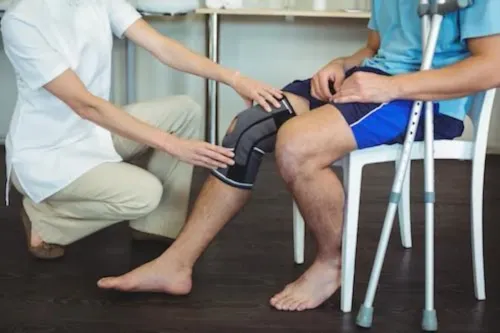
The early phase focuses on protecting the repaired structure. The patient may need a brace, cast, boot, sling, or restricted movement.
Treatment may include:
- Positioning.
- Swelling management.
- Gentle movement of permitted joints.
- Muscle contractions.
- Circulation exercises.
- Safe transfers.
- Walking-aid training.
- Education about precautions.
Do not stretch, load, or actively move the repaired tissue beyond the surgeon’s protocol.
Mobility phase
Once movement is allowed, physiotherapy may address:
- Joint stiffness.
- Reduced flexibility.
- Muscle inhibition.
- Scar-related restriction after healing.
- Safe weight-bearing.
- Controlled movement.
- Functional tasks.
Progress depends on the tissue repaired and the stability of the reconstruction.
Strengthening phase
Progressive exercises may target:
- Muscles surrounding the repaired joint.
- Core and trunk control.
- Hip and lower-limb strength.
- Shoulder and arm strength.
- Grip where relevant.
- Balance and proprioception.
Strengthening should be increased gradually according to pain, swelling, healing, and medical clearance.
Functional and sport-specific phase
Later rehabilitation may include:
- Walking progression.
- Step training.
- Balance exercises.
- Agility.
- Running preparation.
- Jumping and landing.
- Throwing or kicking.
- Sport-specific drills.
- Return-to-work tasks.
Return to sport should be based on strength, control, stability, confidence, and medical clearance rather than time alone.
Rehabilitation After Spinal Surgery
Early mobility
Early spinal rehabilitation may involve:
- Rolling and repositioning.
- Log-roll bed mobility.
- Sitting and standing.
- Short walks.
- Safe transfers.
- Walking-aid instruction.
- Posture education.
The patient should avoid sudden twisting, forceful bending, and lifting beyond the prescribed limit.
Movement and posture
Treatment may help patients learn:
- Neutral spinal positioning.
- Safe sitting.
- Safe standing.
- Controlled transitions.
- Hip-hinge movement.
- Proper lifting mechanics when cleared.
- Pacing during daily activities.
Good movement habits can help patients regain confidence without unnecessarily avoiding all activity.
Strength and endurance
As healing progresses, treatment may include:
- Walking progression.
- Core and trunk exercises.
- Hip strengthening.
- Leg strengthening.
- Postural exercises.
- Balance training.
- Low-impact cardiovascular conditioning.
- Functional strengthening.
Exercises should be progressed according to the surgical procedure and the surgeon’s guidance.
Return to daily activity
Rehabilitation may prepare patients for:
- Household tasks.
- Personal care.
- Stairs.
- Work.
- Driving after clearance.
- Light lifting.
- Recreation.
- Longer periods of sitting or standing.
The timing depends on the operation, symptoms, healing, occupation, and medical advice.
Pain Management
Physiotherapy may support pain management through:
- Comfortable positioning.
- Gentle movement.
- Activity pacing.
- Breathing and relaxation.
- Gradual strengthening.
- Education.
- Appropriate use of heat or cold when medically suitable.
- Improved posture and movement control.
Pain should be monitored during and after treatment. Severe, sudden, or progressively worsening pain should be reported.
Nerve Symptoms After Spinal Surgery
Some patients may experience numbness, tingling, weakness, or altered sensation before or after spinal surgery. These symptoms require careful monitoring.
Contact the surgeon promptly if you notice:
- New or worsening leg or arm weakness.
- New loss of sensation.
- Loss of bladder or bowel control.
- Numbness around the groin or saddle region.
- Severe increasing back or neck pain.
- Fever or wound discharge.
These symptoms may require urgent medical assessment.
Home Physiotherapy
Home physiotherapy may be useful when travelling is difficult after surgery or when the patient requires assistance with basic mobility.
Home sessions may include:
- Bed mobility.
- Transfers.
- Walking.
- Stair practice.
- Prescribed exercises.
- Posture training.
- Use of a brace or walking aid.
- Caregiver education.
- Home-safety assessment.
Patients may later transition to clinic-based rehabilitation for advanced strengthening, balance, running, or sport-specific training.
Caregiver Support
Caregivers can assist by:
- Helping with safe transfers after instruction.
- Preparing the home.
- Supporting the prescribed exercises.
- Encouraging gradual independence.
- Assisting with meals and personal care.
- Monitoring warning signs.
- Avoiding pulling or twisting the operated limb or spine.
Caregivers should not force movement or increase exercise difficulty without guidance.
Home Preparation
Consider:
- Clear walking paths.
- Stable chairs.
- Good lighting.
- Bathroom supports.
- Frequently used objects within reach.
- A suitable place to exercise.
- Safe stairs.
- Appropriate footwear.
- Help with household tasks.
- A plan for follow-up appointments.
After spinal surgery, arrange frequently used items at a comfortable height to reduce repeated bending or reaching.
Common Mistakes to Avoid
- Loading the repaired ligament or tendon too early.
- Stretching beyond the prescribed limit.
- Removing a brace, cast, boot, or sling without advice.
- Returning to sport as soon as pain decreases.
- Bending, lifting, or twisting too soon after spinal surgery.
- Staying completely inactive for too long.
- Using walking aids incorrectly.
- Ignoring swelling or wound changes.
- Copying another patient’s exercise programme.
- Stopping rehabilitation once basic movement improves.
- Failing to report new neurological symptoms.
Warning Signs Requiring Medical Review
Contact the surgeon or seek urgent medical care for:
- Fever or chills.
- Increasing redness, warmth, or discharge.
- Wound opening or persistent bleeding.
- Sudden severe pain.
- New or worsening weakness.
- New numbness or loss of sensation.
- Loss of bladder or bowel control.
- Severe calf pain or swelling.
- Sudden inability to bear weight.
- Chest pain or breathlessness.
- Repeated falls.
- Sudden change in joint position or limb appearance.
Frequently Asked Questions
When should physiotherapy begin after ligament or tendon repair?
The timing depends on the repair, tissue involved, surgical protocol, brace or cast, and medical clearance. Early treatment may focus on protection, swelling control, safe movement, and muscle activation.
When should physiotherapy begin after spinal surgery?
It may begin in hospital or after discharge, depending on the procedure and medical stability. Early goals commonly include safe bed mobility, transfers, walking, posture, and activity education.
Can physiotherapy prevent stiffness after tendon or ligament surgery?
Appropriately timed physiotherapy may help maintain permitted movement and reduce avoidable stiffness, but the repaired structure must be protected during healing.
How long does recovery take?
Recovery varies according to the tissue repaired, surgical method, spinal procedure, healing, age, general health, work demands, and rehabilitation participation. Some patients require several months of progressive rehabilitation.
Can I return to sports after ligament or tendon repair?
Many patients return to sport, but rehabilitation must restore strength, joint control, balance, confidence, and sport-specific function before clearance.
Can I have physiotherapy at home?
Home physiotherapy may be appropriate when travel is difficult or the patient needs early support with transfers, walking, posture, or exercises.
Is pain after spinal surgery normal?
Some pain and stiffness may occur during recovery, but severe or progressively worsening pain, new weakness, or new bladder or bowel symptoms requires prompt medical review.
Why Choose Physionyx?
At Physionyx Physiotherapy & Rehab in Green Park, South Delhi, rehabilitation after ligament or tendon repair and spinal surgery is tailored to the surgical protocol, healing stage, symptoms, mobility, and personal goals. Dr. Niraj Kumar may combine therapeutic exercise, mobility training, strengthening, balance work, gait rehabilitation, posture education, functional training, and caregiver guidance.
The aim is to protect healing tissues while helping patients regain safe movement, strength, confidence, and independence.
Book an Assessment
If ligament or tendon repair or spinal surgery has affected your strength, walking, movement, balance, or daily activities, contact Physionyx Physiotherapy & Rehab in Green Park, South Delhi. A personalised post-operative assessment can help identify your precautions, rehabilitation priorities, and safe next steps.
Keywords