Proprioceptive Neuromuscular Facilitation in Physiotherapy
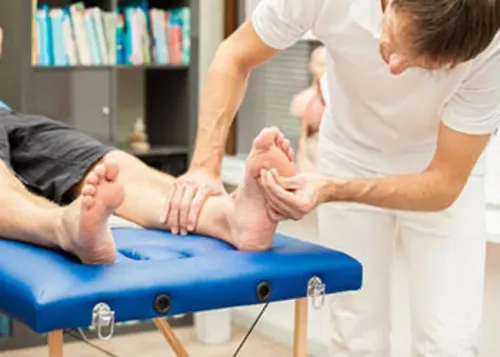
Proprioceptive Neuromuscular Facilitation, commonly called PNF, is a specialised physiotherapy approach that uses guided movement, manual resistance, stretching, verbal instructions, and sensory feedback to improve how the nervous system and muscles work together. It can help patients develop better movement control, strength, flexibility, balance, coordination, and functional independence.
At Physionyx Physiotherapy & Rehab, PNF is selected according to the patient’s condition, movement limitations, strength, pain level, balance, coordination, and rehabilitation goals. It may be useful in neurological rehabilitation, orthopaedic recovery, sports rehabilitation, post-surgical care, and movement retraining.
What Does PNF Mean?
The term has three parts:
- Proprioceptive: Relates to the body’s ability to sense joint position, movement, pressure, and muscle length.
- Neuromuscular: Refers to communication between the nervous system and muscles.
- Facilitation: Means helping or encouraging a desired movement response.
In simple terms, PNF helps the brain and body practise useful movement patterns through carefully guided sensory and physical input. The therapist may use touch, resistance, visual guidance, verbal commands, and diagonal movement patterns to improve the quality of movement.
How PNF Works
PNF does not treat only one muscle in isolation. It often uses coordinated movement patterns involving several joints and muscle groups, similar to movements used in everyday life.
For example, instead of strengthening only the shoulder, a PNF pattern may combine:
- Shoulder movement.
- Elbow and wrist positioning.
- Trunk rotation.
- Head and eye movement.
- Weight shifting.
- Functional reaching.
This approach can help patients practise movement that is more relevant to walking, reaching, rolling, standing, lifting, dressing, or transferring.
The therapist gradually changes the amount of assistance or resistance according to the patient’s ability. The patient may begin with passive or assisted movement and progress toward active movement, resistance, balance work, and functional activity.
Who May Benefit?
PNF may be considered for patients with:
- Stroke-related weakness or movement difficulty.
- Brain injury or neurological impairment.
- Spinal cord injury.
- Multiple sclerosis or other neurological conditions.
- Parkinson’s disease and balance limitations.
- Muscle weakness after prolonged illness or hospitalisation.
- Joint stiffness and restricted range of motion.
- Shoulder, hip, knee, or spinal movement problems.
- Post-surgical weakness or reduced coordination.
- Sports injuries requiring strength and movement retraining.
- Poor balance, postural control, or gait difficulty.
- Reduced proprioception after injury.
- Difficulty performing everyday movements.
PNF is not automatically suitable for everyone. The physiotherapist first assesses the patient’s diagnosis, tissue healing, pain, joint stability, fatigue, cardiovascular status, cognition, and ability to follow instructions.
Main Goals of PNF
The specific goal depends on the patient’s needs. PNF may be used to support:
- Improved joint range of motion.
- Better muscle activation.
- Increased strength and endurance.
- Improved balance and postural stability.
- Better coordination between body regions.
- Improved walking and gait control.
- Enhanced weight shifting and body awareness.
- Reduced movement fear.
- Improved functional movement.
- Safer transfers and daily activities.
- Greater confidence and independence.
Research has reported potential improvements in pain, range of motion, strength, endurance, coordination, balance, gait, and functional movement when PNF is appropriately integrated into rehabilitation.
Common PNF Techniques
Rhythmic Initiation
Rhythmic initiation is often used when a patient has difficulty starting or understanding a movement. The therapist may guide the movement passively, then assist the patient, and finally encourage the patient to perform it actively.
This technique may be useful for:
- Teaching a new movement.
- Reducing hesitation.
- Improving relaxation.
- Helping patients understand the direction of movement.
- Supporting early neurological rehabilitation.
Repeated Contractions
Repeated contractions involve practising a movement several times with appropriate resistance or assistance. The aim is to improve muscle activation and help the patient complete a movement through a greater range.
It may be considered when a patient has:
- Muscle weakness.
- Difficulty sustaining movement.
- Reduced control in part of a movement.
- Limited endurance.
Hold-Relax
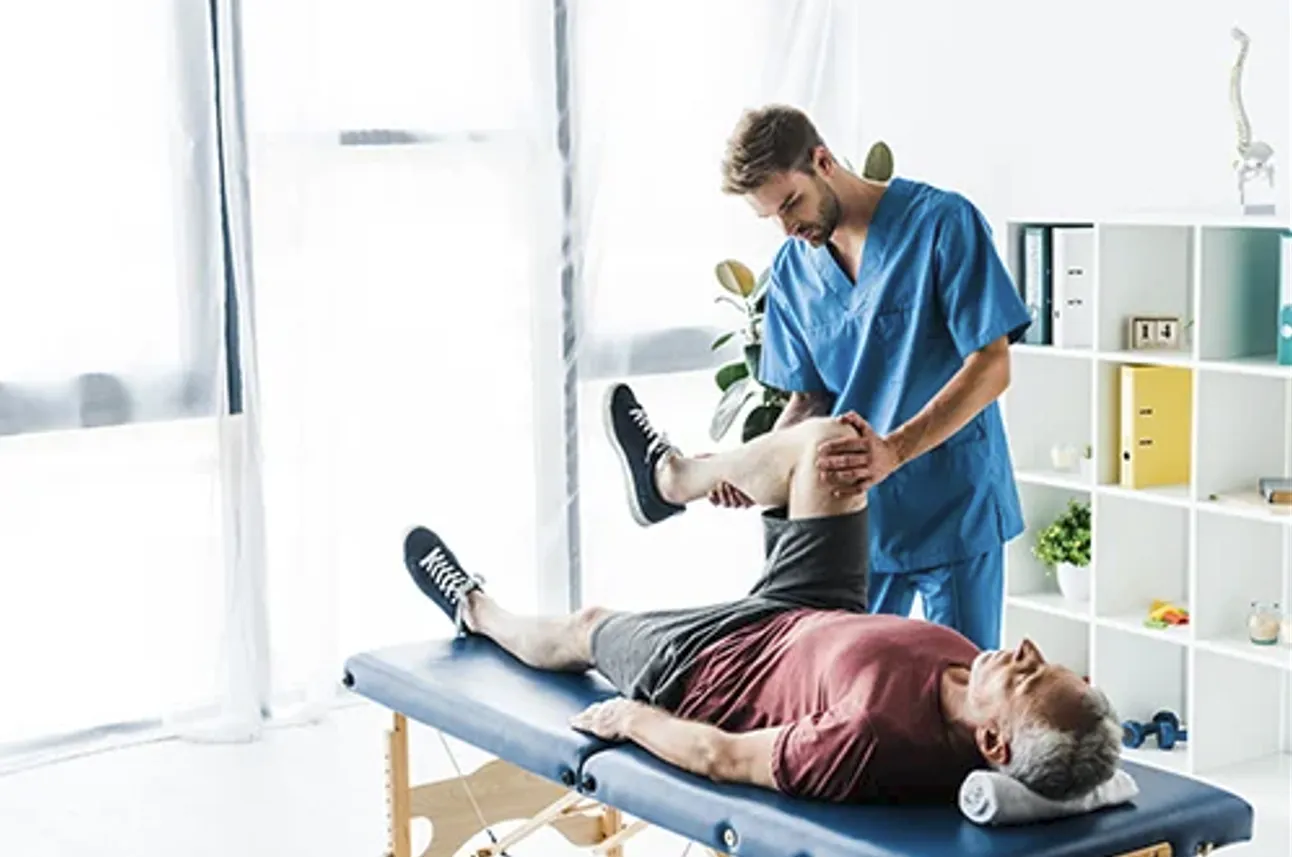
In hold-relax, the patient gently contracts a muscle without moving the joint while the therapist provides resistance. After the contraction, the muscle is allowed to relax and the therapist may guide the joint into a carefully selected stretch.
This technique is commonly used to support flexibility and range of motion, but it must be modified or avoided when contraction or stretching is unsafe.
Contract-Relax
Contract-relax involves a controlled muscle contraction followed by relaxation and active or assisted movement into an improved range. It may help patients who have stiffness or limited flexibility.
The technique should not be forced, particularly when pain is severe, tissues are healing, or the joint is unstable.
Rhythmic Stabilisation
Rhythmic stabilisation uses alternating resistance to encourage the patient to maintain a position without losing balance or alignment. It can help develop trunk, shoulder, hip, or postural stability.
It may be useful for:
- Poor sitting or standing balance.
- Trunk weakness.
- Shoulder instability.
- Reduced postural control.
- Difficulty maintaining a functional position.
Slow Reversal
Slow reversal alternates controlled movement between opposing muscle groups. For example, the patient may move in one direction against resistance and then reverse the movement.
This may help improve:
- Coordination.
- Strength.
- Movement control.
- Muscle endurance.
- Smooth transitions between movements.
Combination of Isotonics
This technique combines concentric, eccentric, and stabilising muscle contractions without completely relaxing between them. It may help improve control throughout a movement and support functional strengthening.
Diagonal and Spiral Patterns
PNF commonly uses diagonal and spiral patterns because many natural movements occur in these directions rather than in a straight line. Reaching across the body, bringing the hand toward the face, stepping, turning, and lifting may all involve diagonal movement.
These patterns may be adapted for:
- Upper-limb rehabilitation.
- Lower-limb strengthening.
- Trunk rotation.
- Walking practice.
- Reaching and functional tasks.
- Sports-specific movement.
PNF for Neurological Rehabilitation
For neurological patients, PNF may help the nervous system practise coordinated movement after weakness, impaired balance, altered muscle tone, or loss of motor control.
At Physionyx, it may be integrated into rehabilitation for conditions such as:
- Stroke.
- Parkinson’s disease.
- Multiple sclerosis.
- Spinal cord injury.
- Traumatic brain injury.
- Cerebral palsy.
- Peripheral nerve disorders.
- Other neurological movement impairments.
Treatment may include rolling, bridging, sitting balance, standing control, weight shifting, walking, reaching, trunk activation, and functional transitions. PNF has been studied as part of stroke rehabilitation, with potential benefits for balance and gait when included in a broader rehabilitation programme.
PNF is not intended to reverse permanent neurological damage. Its purpose is to help patients use available movement more effectively, maintain flexibility and strength, reduce secondary complications, and improve participation in daily life.
PNF for Frozen Shoulder
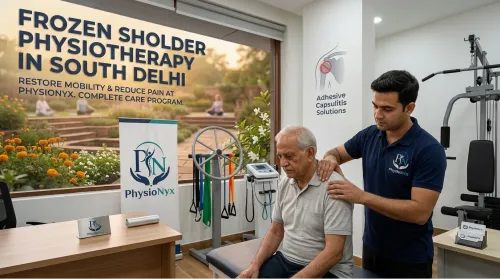
PNF may be used as one component of treatment for adhesive capsulitis or frozen shoulder. Carefully selected hold-relax, contract-relax, active movement, scapular control, and strengthening exercises may help improve shoulder range and reduce movement-related disability.
It should be performed within safe limits and combined with appropriate pain management, joint mobilisation, stretching, and home exercises. Evidence suggests that selected PNF techniques, particularly contract-relax and hold-relax approaches, may support improvements in pain, range of motion, and function in frozen shoulder.
PNF for Sports and Orthopaedic Rehabilitation
PNF may support recovery after injury or surgery by helping patients regain strength, coordination, proprioception, and confidence in movement.
It may be incorporated into rehabilitation for:
- Knee injuries.
- Ankle sprains.
- Shoulder injuries.
- Muscle strains.
- Ligament injuries.
- Post-operative weakness.
- Joint stiffness.
- Poor balance after injury.
- Return-to-sport preparation.
The therapist may progress from basic movement control to resistance, balance, agility, functional loading, and sport-specific activities. PNF should complement—not replace—strength training, mobility work, tissue-healing precautions, and graded functional rehabilitation.
What Happens During a PNF Session?
A typical PNF session at Physionyx may include:
- Assessment: The physiotherapist evaluates posture, movement, strength, flexibility, balance, coordination, pain, and functional limitations.
- Goal setting: The therapist identifies meaningful goals, such as walking better, reaching overhead, standing independently, or returning to sport.
- Movement preparation: The patient is positioned comfortably and informed about the movement, resistance, and expected response.
- Guided practice: The therapist uses touch, verbal cues, visual guidance, and resistance to facilitate the selected pattern.
- Functional integration: The movement is connected to a practical activity such as rolling, reaching, standing, stepping, or walking.
- Home guidance: The patient may receive safe exercises and instructions for continuing progress at home.
The session is adapted to the patient’s fatigue, pain, concentration, strength, and medical condition. PNF should feel challenging but controlled; sharp pain, excessive fatigue, or worsening symptoms should not be ignored.
Is PNF Painful?
PNF should not be forced or used to provoke significant pain. Some patients may feel muscle effort, stretching, or mild temporary discomfort, but the response should remain within an acceptable and controlled range.
Patients should tell the physiotherapist if they experience:
- Sharp or sudden pain.
- Joint catching or giving way.
- Numbness or unusual tingling.
- Dizziness or breathlessness.
- Excessive fatigue.
- Increased swelling.
- Symptoms that persist or worsen after treatment.
The therapist can modify the resistance, position, range, speed, or technique.
Safety and Precautions
PNF requires professional assessment when the patient has:
- Recent fracture, surgery, or tissue repair.
- Severe or unexplained pain.
- Joint instability or dislocation risk.
- Acute inflammation or significant swelling.
- Severe osteoporosis.
- Uncontrolled blood pressure or cardiac disease.
- Serious balance or fall risk.
- Severe fatigue or respiratory limitation.
- Cognitive or communication difficulties.
- New neurological symptoms.
Patients with sudden weakness, facial drooping, difficulty speaking, chest pain, severe breathing difficulty, loss of consciousness, or a new severe headache should seek urgent medical care rather than beginning routine physiotherapy.
Why Choose Physionyx?
At Physionyx Physiotherapy & Rehab, PNF is used as part of a broader, goal-oriented rehabilitation plan rather than as a generic exercise routine. Dr. Niraj Kumar considers the patient’s diagnosis, functional needs, medical history, lifestyle, and recovery priorities before selecting appropriate techniques.
The treatment may combine PNF with:
- Manual therapy.
- Therapeutic exercises.
- Strength and endurance training.
- Balance and gait rehabilitation.
- Neurological rehabilitation.
- Postural correction.
- Mobility and flexibility training.
- Functional task practice.
- Patient and caregiver education.
This integrated approach helps connect improvements in muscle activation or flexibility to activities that matter in daily life.
Frequently Asked Questions
Is PNF the same as stretching?
No. PNF can include stretching, but it is a broader rehabilitation approach involving movement patterns, resistance, sensory feedback, coordination, balance, and functional training.
Can PNF help after a stroke?
PNF may help support movement control, balance, coordination, strength, and gait as part of a comprehensive stroke rehabilitation programme. The techniques must be adapted to the patient’s weakness, muscle tone, communication ability, fatigue, and safety needs.
Can PNF improve flexibility?
PNF stretching can produce short-term improvements in active and passive range of motion. Longer-term improvement depends on regular, appropriate practice and addressing the underlying cause of stiffness.
Can PNF help with pain?
PNF may help reduce pain in selected conditions by improving movement, muscle control, flexibility, and joint function. It is not a universal pain treatment, and the cause of pain must first be assessed.
Is PNF suitable for children?
PNF may be adapted for children when clinically appropriate, but the activities should be age-appropriate, engaging, safe, and coordinated with the child’s medical diagnosis and developmental needs.
Can I perform PNF at home?
Some simple exercises may be prescribed for home practice, but manual resistance and advanced PNF techniques should be taught by a qualified physiotherapist. Incorrect force, direction, or stretching may worsen symptoms or cause injury.
How many sessions are needed?
The number of sessions depends on the diagnosis, severity, goals, response to treatment, and ability to continue exercises independently. Your physiotherapist can reassess progress and adjust the plan.
Book an Assessment
If you are looking for PNF physiotherapy in South Delhi or New Delhi, contact Physionyx Physiotherapy & Rehab for an individual assessment. PNF may be relevant if you need help with weakness, stiffness, poor balance, reduced coordination, restricted movement, gait difficulty, or recovery after a neurological, orthopaedic, or sports-related condition.
The physiotherapy team can determine whether PNF is suitable for you and explain how it may be integrated into a safe, personalised rehabilitation programme.
Keywords