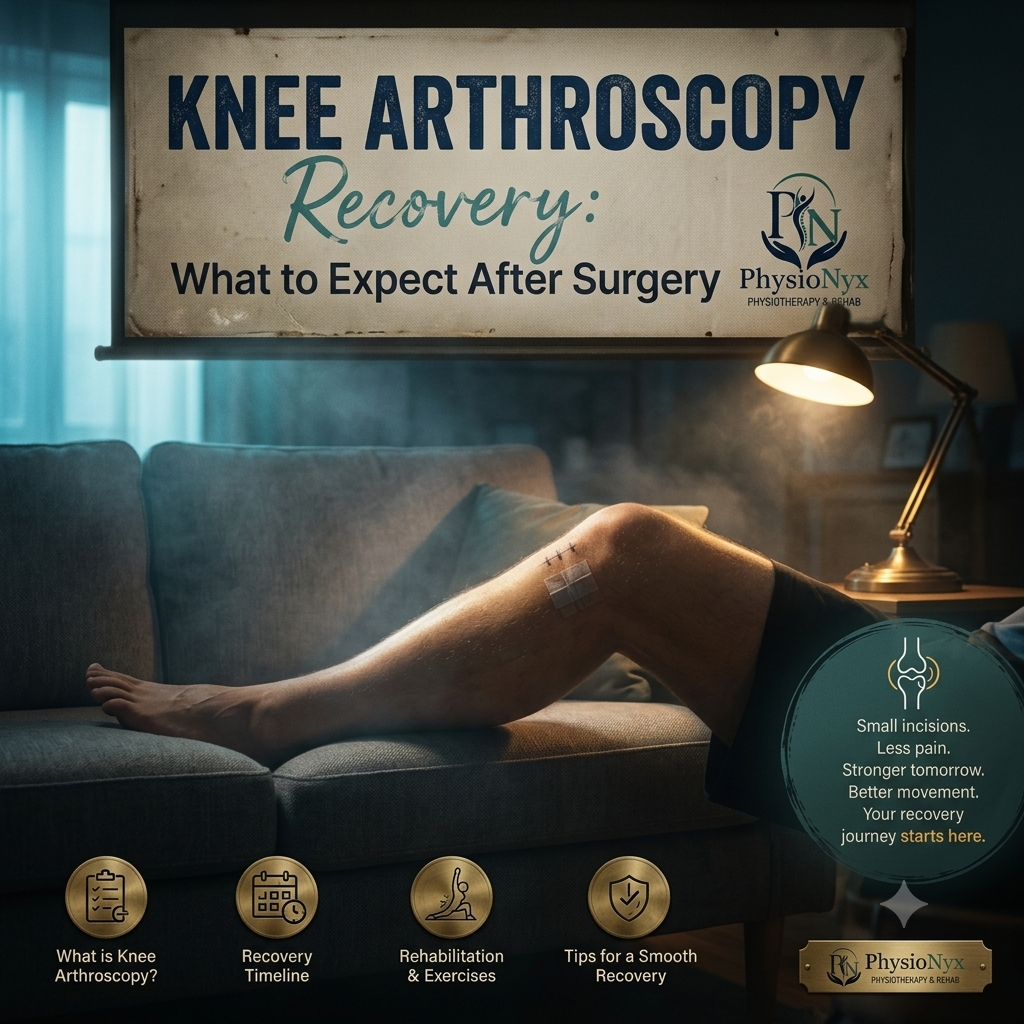
Physiotherapy After Meniscus Surgery in Delhi
Introduction
Meniscus surgery can help treat a damaged or torn meniscus, but recovery continues after the procedure. Many patients experience knee pain, swelling, stiffness, weakness, difficulty walking, or uncertainty about when to return to normal activities.
Physiotherapy after meniscus surgery helps restore knee movement, rebuild strength, improve walking and balance, and support a gradual return to work, exercise, or sport. The rehabilitation programme should always follow the instructions provided by your orthopaedic surgeon.
If you are looking for physiotherapy after meniscus surgery in Delhi, an assessment can help determine the right rehabilitation plan for your surgery, symptoms, and daily goals.
What Is the Meniscus?
The menisci are crescent-shaped pieces of cartilage inside the knee joint. They help absorb load, improve joint stability, and support smooth movement between the thigh bone and shin bone.
A meniscus injury can occur because of:
- A sudden twisting movement.
- Sports-related activity.
- A fall or direct impact.
- Repeated knee stress.
- Age-related changes in the cartilage.
Depending on the injury, surgery may involve meniscus repair or partial meniscectomy. These procedures have different recovery requirements, so patients should not follow a standard exercise programme without professional guidance.
Why Physiotherapy Is Important
After meniscus surgery, pain and swelling may reduce muscle activation and limit normal movement. Patients may also develop a limp, avoid putting weight through the operated leg, or find stairs and sitting difficult.
Physiotherapy may help to:
- Manage pain and swelling.
- Restore knee bending and straightening.
- Activate and strengthen the quadriceps.
- Improve hip, calf, and hamstring strength.
- Retrain walking.
- Improve balance and coordination.
- Build confidence during weight-bearing.
- Support a gradual return to daily activities.
- Prepare the knee for exercise or sport.
Physiotherapy supports recovery but does not replace surgical follow-up or medical advice.
Recovery Stages
Early stage
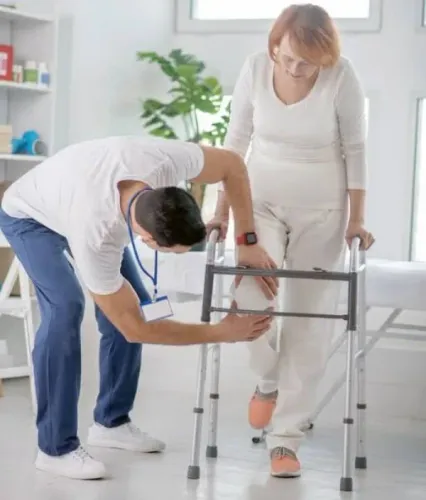
The early phase focuses on protecting the knee, controlling symptoms, and maintaining safe movement. Depending on the procedure, your surgeon may prescribe crutches, a brace, or temporary restrictions on weight-bearing.
A physiotherapist may introduce:
- Ankle-pump exercises.
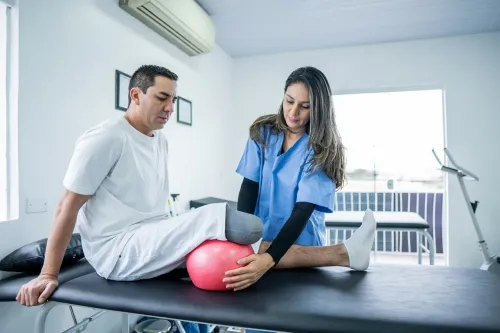
- Gentle quadriceps activation.
- Safe knee movement within the permitted range.
- Walking with prescribed support.
- Transfer practice.
- Positioning and swelling-management advice.
- Guidance about daily activities.
The amount of weight placed through the leg should follow your surgeon’s instructions.
Movement restoration
Knee stiffness can make walking, sitting, stair use, and getting in or out of a car difficult. Controlled mobility exercises may help gradually improve knee bending and straightening.
Your physiotherapist may monitor:
- Knee range of motion.
- Swelling after activity.
- Ability to straighten the knee.
- Pain during movement.
- Quadriceps activation.
- Walking quality.
Movement should be controlled and progressive. Forcing the knee can increase irritation and swelling.
Strengthening
The quadriceps may become weak after surgery because of pain, swelling, and reduced activity. Strengthening is gradually progressed according to the surgical procedure and recovery response.
Exercises may include:
- Quadriceps contractions.
- Straight-leg raises.
- Bridges.
- Heel raises.
- Sit-to-stand practice.
- Supported mini squats.
- Step-ups.
- Resistance exercises.
- Hip and core strengthening.
The appropriate exercises, repetitions, resistance, and range of motion should be decided by your physiotherapist.
Balance and functional training
As knee strength improves, rehabilitation may include balance and functional exercises. These activities help prepare the patient for walking outdoors, stairs, turning, lifting, and other daily movements.
Training may include:
- Supported standing.
- Weight-shifting.
- Step control.
- Single-leg balance when appropriate.
- Stair practice.
- Controlled direction changes.
- Work- or sport-specific movements.
Advanced exercises should begin only when your knee has adequate movement, strength, and control.
Meniscus Repair vs Partial Meniscectomy
Recovery depends partly on the type of surgery performed.
After meniscus repair
A repaired meniscus may need additional protection while the tissue heals. Weight-bearing, knee bending, squatting, and strengthening may be restricted for a period specified by the surgeon.
After partial meniscectomy
Some patients may progress more quickly after part of the damaged meniscus is removed. However, pain, swelling, weakness, and movement limitations can still require physiotherapy.
If another procedure was performed at the same time, such as ligament or cartilage surgery, rehabilitation may follow a different and more protective protocol.
Activities to Avoid or Modify
Until cleared by your surgeon or physiotherapist, you may need to avoid or modify:
- Deep squats.
- Kneeling.
- Twisting on the operated leg.
- Running and jumping.
- Sudden changes of direction.
- Heavy lifting.
- Long walks that increase swelling.
- High-resistance gym exercises.
- Repeated stair use.
- Returning to sports too quickly.
Do not stop using a brace or walking aid, or increase your activity, without appropriate guidance.
Returning to Work and Exercise
Return to activity depends on your work demands and recovery progress. Desk work, driving, manual work, running, gym training, and sports place different demands on the knee.
Before returning to higher-level activity, your rehabilitation team may consider:
- Knee movement.
- Strength in both legs.
- Walking and stair control.
- Balance.
- Swelling response.
- Ability to squat or step safely.
- Movement quality.
- Sport-specific control.
- Medical clearance.
A specific number of weeks does not determine readiness for every patient.
Physionyx Rehabilitation Approach
At Physionyx Physiotherapy & Rehab in Green Park, South Delhi, rehabilitation can be planned around your surgery, symptoms, movement restrictions, strength, walking ability, medical history, and personal goals.
An assessment may review:
- Knee range of motion.
- Pain and swelling.
- Quadriceps activation.
- Hip, thigh, and calf strength.
- Walking pattern.
- Balance and coordination.
- Stair and transfer ability.
- Home-exercise performance.
- Work, exercise, and sport requirements.
Treatment may include therapeutic exercise, progressive strengthening, mobility work, gait retraining, balance training, functional exercises, manual techniques when clinically appropriate, and home-exercise guidance.
Physionyx describes its care as personalised and assessment-led. Dr. Niraj Kumar’s listed qualifications include an MPT in Neurology, with experience in rehabilitation and functional recovery.
When to Seek Medical Advice
Contact your surgeon or medical team if you experience:
- Sudden severe knee pain.
- Rapidly increasing swelling.
- Fever.
- Wound discharge or increasing redness.
- New numbness or marked weakness.
- New or worsening inability to bear weight.
- Severe calf pain or swelling.
- A cold, pale, or unusually coloured foot.
- Chest pain or sudden breathlessness.
Do not continue or intensify exercises while waiting for medical advice if symptoms are severe or rapidly worsening.
Frequently Asked Questions
When should physiotherapy begin after meniscus surgery?
The timing depends on whether the meniscus was repaired or partially removed, along with the surgeon’s protocol and your general health. Some patients begin gentle rehabilitation soon after surgery, while others require a more protected early phase.
How long does recovery take?
Recovery varies according to the surgical procedure, injury, healing response, age, health, activity level, and rehabilitation goals. Meniscus repair usually requires a different progression from some partial-meniscectomy procedures.
Can I walk after meniscus surgery?
Some patients walk with support soon after surgery, while others have temporary restrictions on weight-bearing. Use crutches or a brace exactly as advised.
Is swelling normal after surgery?
Some swelling may occur after surgery and activity. Rapidly increasing swelling, severe pain, fever, wound changes, or calf symptoms require medical assessment.
When can I return to running?
Return to running should depend on knee movement, strength, balance, swelling response, movement control, and medical clearance. A gradual progression is safer than returning suddenly.
Can physiotherapy prevent another meniscus injury?
Physiotherapy may improve strength, balance, movement control, and activity habits, which can support safer movement. However, no treatment can guarantee that another injury will not occur.
Are home exercises necessary?
A prescribed home programme may help maintain progress between physiotherapy appointments. Perform the exercises as instructed and report symptoms that persist or worsen.
Physiotherapy After Meniscus Surgery in Delhi
Recovery after meniscus surgery involves more than waiting for pain to settle. The knee may need progressive mobility work, strengthening, walking retraining, balance exercises, and functional rehabilitation.
If you are searching for physiotherapy after meniscus surgery in Delhi, Physionyx Physiotherapy & Rehab in Green Park, South Delhi, can assess your condition and develop a rehabilitation plan based on your surgery and recovery goals.
Physionyx Physiotherapy & Rehab
Green Park, New Delhi
Phone: +91 99116 63262
Book an Appointment With Us Visit www.physionyx.in
This article is for general education and does not replace advice from your orthopaedic surgeon or physiotherapist.
Keywords