Spinal Fusion Rehabilitation: A Complete Guide to Recovery
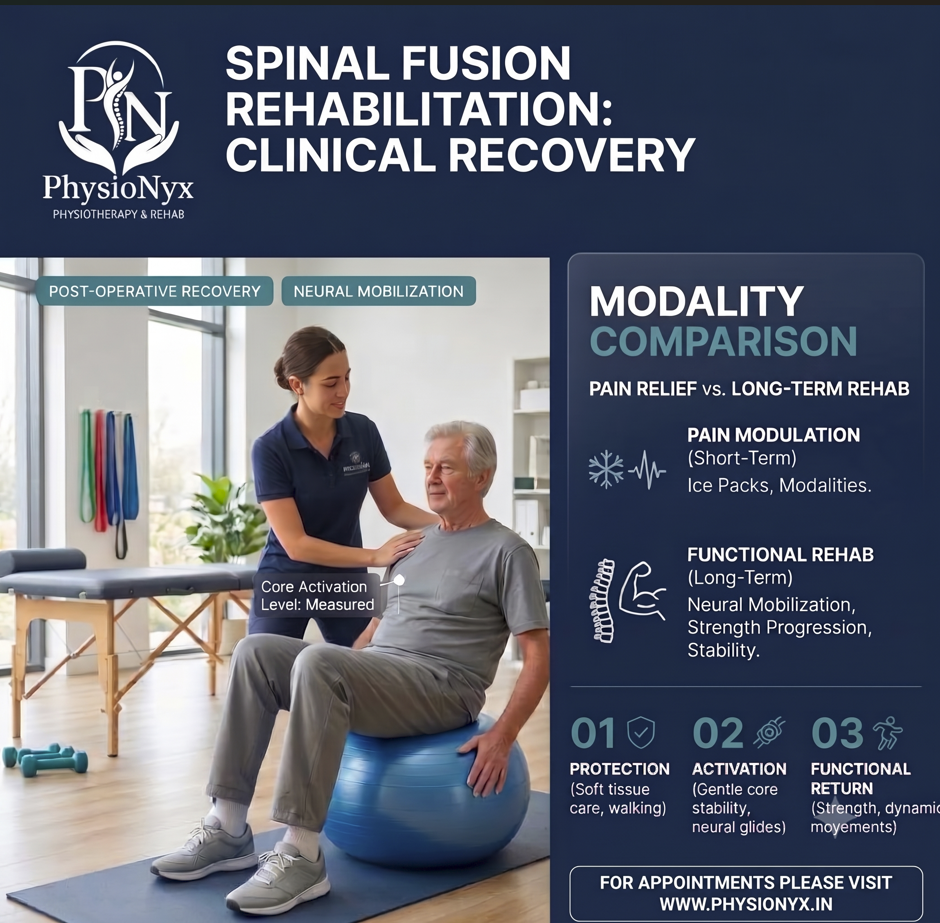
Spinal fusion surgery is a major procedure designed to stabilise painful or unstable segments of the spine. While the operation addresses structural problems, successful long-term outcomes depend heavily on structured rehabilitation.
Recovery after spinal fusion is a marathon, not a sprint. It requires patience, consistency, and adherence to precautions while gradually rebuilding strength, mobility, and confidence.
This guide provides a comprehensive overview of spinal fusion rehabilitation, including phases, exercises, precautions, and realistic timelines to help patients and families navigate the recovery journey.
Physionyx Physiotherapy & Rehab in Green Park, New Delhi, specialises in post-spinal fusion rehabilitation, offering personalised, phase-wise programmes tailored to each patient's surgical details and life goals.
Understanding Spinal Fusion Surgery
What is spinal fusion?
Spinal fusion involves joining two or more vertebrae together using:
- Bone grafts (from your own body or donor).
- Metal implants (screws, rods, plates, cages).
Over time (typically 6–12 months), the bone graft heals and fuses the vertebrae into a single, solid segment.
Common reasons for spinal fusion
- Degenerative disc disease.
- Spondylolisthesis (vertebral slippage).
- Spinal stenosis with instability.
- Recurrent disc herniation.
- Scoliosis or other deformities.
- Trauma or fractures.
- Tumours or infections (less common).
What changes after fusion?
- The fused segment becomes rigid and no longer moves.
- Adjacent spinal levels experience increased stress and motion.
- Core and back muscles weaken due to post-surgical rest and guarding.
- Movement patterns change, often leading to compensatory strain elsewhere.
Understanding these changes helps explain why rehabilitation is essential—not just for recovery, but for long-term spinal health.
Why Rehabilitation Matters After Spinal Fusion
Without guided physiotherapy, patients risk:
- Persistent pain and stiffness from muscle weakness and altered movement patterns.
- Poor posture that increases stress on adjacent segments.
- Delayed return to work and daily activities.
- Higher long-term risk of adjacent segment degeneration (wear and tear n nearby levels).
- Fear of movement (kinesiophobia) that limits function and quality of life.
A structured rehabilitation programme ensures:
- Safe progression through healing phases.
- Proper body mechanics and posture.
- Gradual rebuilding of strength and endurance.
- Confidence in returning to meaningful activities.
Phases of Spinal Fusion Rehabilitation
Recovery is typically divided into four phases, each with specific goals, precautions, and interventions. Timelines are approximate and always subject to surgeon clearance.
Phase 1: Early Post-Operative Phase (Weeks 0–6)
Primary Goals
- Protect the fusion site.
- Manage pain and swelling.
- Educate on spinal precautions.
- Begin gentle activation and mobility.
- Establish safe movement patterns.
Typical Restrictions
- No bending from the waist (especially flexion).
- No lifting more than 2–5 kg.
- No twisting of the spine.
- Limited sitting (often 20–40 minutes at a time initially).
- No driving until cleared.
What This Phase Includes
Hospital stay (Days 0–5):
- First mobilisation within 24–48 hours after surgery (as cleared).
- Learning log-rolling technique for bed mobility.
- Short walks with assistance.
- Education on wound care and precautions.
Early home phase (Weeks 1–6):
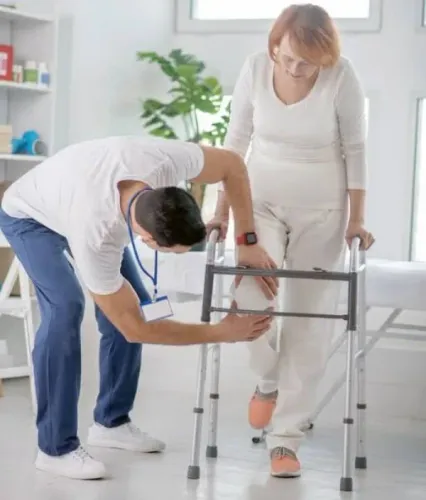
- Walking programme: Short, frequent walks (5–10 minutes, 3–5 Times/day).
- Transfers: Safe bed, chair, and toilet transfers using proper mechanics.
- Gentle exercises (as prescribed):
- Abdominal bracing (deep core activation).
- Pelvic tilts (small range, if cleared).
- Ankle pumps and calf exercises.
- Scapular retraction and posture drills.
- Heel slides (for gentle lumbar mobility, if allowed).
- Sitting tolerance training: Gradually increasing from 15–20 minutes to 30–40 minutes as tolerated.
- Brace use: If prescribed, education on wearing schedule and weaning.
Expected Milestones by Week 6
- Wound healed; sutures removed (if not dissolvable).
- Walking independently indoors for short distances.
- Basic understanding of spinal precautions.
- Pain gradually improving (though still present).
Phase 2: Intermediate Phase (Weeks 6–12)
Primary Goals
- Improve mobility and sitting/standing tolerance.
- Begin structured strengthening.
- Normalise gait and daily function.
- Continue protecting the fusion site.
Typical Progression
- X-rays reviewed to confirm early bone healing.
- Gradual relaxation of some restrictions (based on surgeon clearance).
- Introduction of more active exercises.
What This Phase Includes
Mobility:
- Walking 20–30 minutes, 1–2 times/day.
- Managing stairs with better confidence (one step at a time, using rail).
- Longer car rides with frequent breaks.
Core Strengthening:
- Transverse abdominis and multifidus activation.
- Bridging (if cleared).
- Dead bug variations (modified).
- Bird-dog (small range, controlled).
Hip and Glute Strengthening:
- Clamshells.
- Standing hip abduction/extension.
- Mini squats.
- Step-ups (low step).
Posture and Ergonomics:
- Workstation setup for desk jobs.
- Safe lifting mechanics (hip hinge pattern).
- Body mechanics for daily tasks (brushing teeth, washing dishes, etc.).
Gentle Mobility:
- Thoracic spine mobility (away from fusion site).
- Hip flexor and hamstring stretches (within limits).
- Nerve gliding exercises (if nerve symptoms persist).
Expected Milestones by Week 12
- Walking 30–45 minutes without significant pain.
- Sitting tolerance of 45–60 minutes with breaks.
- Improved core and hip strength.
- Return to light desk work (if not already done).
Phase 3: Advanced Strengthening (Months 3–6)
Primary Goals
- Build endurance and strength.
- Prepare for return to work and recreational activities.
- Reduce long-term stress on adjacent segments.
- Improve movement quality and confidence.
What This Phase Includes
Dynamic Core Exercises:
- Planks (modified to full).
- Side planks.
- Dead bug (progressive variations).
- Pallof press (anti-rotation core work).
Functional Strengthening:
- Step-ups and step-downs (higher steps).
- Lunges (controlled range).
- Resistance training for legs and upper body.
- Farmer's carries (light weights, short distances).
Balance and Proprioception:
- Single-leg stance.
- Unstable surface training (as cleared).
- Perturbation training (gentle, controlled disturbances).
Aerobic Conditioning:
- Stationary cycling.
- Treadmill walking (with or without incline).
- Elliptical trainer.
- Pool therapy (if available).
Return-to-Work Planning:
- Desk jobs: Often possible by 8–12 weeks with ergonomic modifications.
- Physical jobs: May require 4–6 months or more, with graded return.
- Driving: Usually permitted after 6–12 weeks (surgeon clearance required).
Expected Milestones by Month 6
- Walking 1 km or more without significant pain.
- Good core and lower-limb strength.
- Return to most daily activities with modifications.
- Improved confidence in movement.
Phase 4: Long-Term Maintenance (6 Months Onwards)
Primary Goals
- Maintain strength and mobility.
- Prevent adjacent segment degeneration.
- Support lifelong spinal health.
- Gradual return to recreational activities and sport (as cleared).
What This Phase Includes
Home Exercise Programme:
- 20–30 minutes, 3–4 times/week.
- Focus on core, hip, and back strength.
- Flexibility work for hips, hamstrings, and thoracic spine.
Periodic Physiotherapy Reviews:
- Every 1–3 months to monitor progress.
- Exercise progression as needed.
- Address any new concerns or setbacks.
Lifestyle Modifications:
- Weight management (reduces spinal load).
- Smoking cessation (smoking impairs bone healing).
- Bone health optimisation (calcium, vitamin D, as advised).
- Ergonomic adjustments at work and home.
Recreational Activities:
- Low-impact sports: Walking, cycling, swimming, golf (as cleared).
- Avoid high-impact activities: Running, jumping, contact sports (unless specifically cleared).
Expected Milestones by 12 Months
- Fusion typically solid on X-ray.
- Near-normal function in daily activities.
- Good strength and endurance.
- Confident participation in recreational activities.
Common Precautions After Spinal Fusion
Throughout recovery, certain precautions help protect the healing fusion:
- No bending from the waist (especially flexion) in early phases.
- No lifting more than 2–5 kg initially (progresses over months).
- No twisting of the spine.
- Avoid high-impact activities (running, jumping) until cleared.
- Limit prolonged sitting (take breaks every 30–45 minutes).
- Use proper body mechanics for all daily tasks.
- Wear brace as prescribed (if applicable).
Your surgeon and physiotherapist will provide specific restrictions based on your surgery.
Red Flags: When to Contact Your Surgeon
During rehabilitation, seek immediate medical advice if you experience:
- Fever, chills, or wound discharge.
- Increasing redness, warmth, or swelling at the incision site.
- New or worsening leg/arm weakness or numbness.
- Loss of bladder or bowel control.
- Saddle anaesthesia (numbness in inner thighs/genital area).
- Severe or escalating pain not relieved by rest/medication.
- Calf pain, swelling, or warmth (possible blood clot).
- Chest pain or breathlessness.
These can indicate infection, nerve compression, blood clots, or other complications.
Physionyx Approach to Spinal Fusion Rehabilitation
At Physionyx Physiotherapy & Rehab in Green Park, New Delhi, spinal fusion rehabilitation is individualised, phase-wise, and evidence-based.
Assessment
- Review of operative notes and surgeon's restrictions.
- Pain, mobility, and neurological screening.
- Posture and movement pattern analysis.
- Functional task assessment (transfers, sitting, walking).
- Goal setting (work, daily activities, recreation).
Treatment
- Education on spinal precautions and body mechanics.
- Gentle activation and mobility exercises within limits.
- Progressive strengthening programme.
- Gait and balance training.
- Ergonomic and lifestyle modifications.
- Pain management strategies (positioning, pacing, breathing).
- Coordination with the surgical team for progression and clearance.
Why Choose Physionyx?
- Specialist-led care: Dr. Niraj Kumar (MPT – Neurology) brings expertise in neurological and orthopaedic rehabilitation.
- Individualised programmes: Tailored to your surgical levels, fitness, and goals.
- Functional focus: Real-life training for Delhi-specific challenges (commuting, stairs, work demands).
- Evidence-based: Latest research and best practices guide every intervention.
- Supportive environment: Patient education and empowerment at every step.
FAQs
1. When can I start physiotherapy after spinal fusion?
Typically 2–6 weeks post-surgery, depending on the procedure and surgeon's clearance. Early sessions focus on education and gentle mobility.
2. How long does it take for the fusion to heal?
Bone fusion typically takes 6–12 months to solidify, though functional improvement occurs gradually over this period.
3. Will I be able to sit on the floor again?
Sitting cross-legged or squatting is often discouraged after lumbar fusion, as it increases stress on the fused segment. Your surgeon and physiotherapist will advise based on your specific levels.
4. Can I drive after spinal fusion?
Driving is usually permitted after 6–12 weeks, once you can react quickly, sit comfortably, and are off sedating medications. Always get explicit surgeon clearance.
5. Is physiotherapy painful?
Exercises should not cause sharp or severe pain. Mild discomfort or muscle fatigue is normal. Your therapist will adjust intensity based on your tolerance.
6. Do I need physiotherapy long-term?
While formal sessions may taper after 3–6 months, a home exercise programme and periodic check-ins are recommended for lifelong spinal health.
7. What if my progress feels slow?
Spinal fusion recovery is measured in months, not weeks. Consistent, gentle activity and adherence to precautions usually yield steady improvement over time.
8. Can I return to sports after spinal fusion?
Low-impact sports (walking, cycling, swimming, golf) are often possible after 6–12 months. High-impact or contact sports may be permanently restricted. Discuss with your surgeon.
Getting Help at Physionyx
If you or a loved one has undergone spinal fusion surgery and needs expert-guided rehabilitation, Physionyx Physiotherapy & Rehab offers personalised, phase-wise care to support safe and confident recovery.
Physionyx Physiotherapy & Rehab
Green Park, New Delhi
Phone: +91 99116 63263
Near Green Park Main Market – serving South Delhi and NCR
Consultant: Dr. Niraj Kumar (MPT – Neurology)
Specialisations: Neurological rehab, orthopaedic post-surgical care, spine rehabilitation, balance and gait training.
Book an Appointment With Us Visit www.physionyx.in
Keywords