
When Should Physiotherapy Start After Surgery?
Introduction
Many patients ask, “When should I start physiotherapy after surgery?” The answer is not the same for everyone.
For some operations, gentle movement and basic physiotherapy may begin during the hospital stay or within the first few days. For other procedures, particularly repairs involving tendons, ligaments, or the spine, movement may need to be restricted for longer. The safest starting point depends on the surgery, healing requirements, medical condition, and instructions from the surgeon.
Physiotherapy should begin as early as medically appropriate, not simply as early as possible.
Why Timing Matters
Starting rehabilitation at the right time can help manage stiffness, weakness, reduced mobility, and difficulty performing daily activities. Early rehabilitation may include basic movements, breathing exercises, circulation exercises, safe transfers, or walking with support, depending on the operation.
However, starting the wrong exercise too soon may place stress on a healing repair. Delaying rehabilitation unnecessarily may contribute to stiffness, muscle loss, reduced confidence, and difficulty returning to normal movement.
The goal is to find the correct balance between protection and progressive activity.
When Physiotherapy May Begin
During the hospital stay
After some procedures, physiotherapy begins on the day of surgery or within the first 24 to 72 hours. The initial session may focus on:
- Getting in and out of bed safely.
- Standing and walking with support.
- Breathing exercises.
- Ankle movements.
- Circulation exercises.
- Safe use of crutches or a walker.
- Basic instructions for home recovery.
This does not mean that every patient should begin active exercise immediately. The type and intensity of treatment depend on medical stability and surgical precautions.
After discharge
Some patients begin outpatient or home physiotherapy after discharge. This may occur within a few days or after the first post-operative review.
The first appointment may involve:
- Reviewing the surgery and medical instructions.
- Checking pain, swelling, and wound-related concerns.
- Assessing movement and strength.
- Confirming weight-bearing restrictions.
- Teaching safe exercises.
- Planning daily activities.
- Creating a home-exercise programme.
After a protected healing period
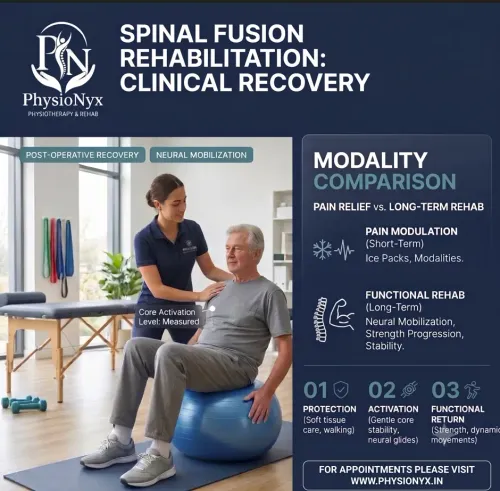
Some procedures require a more protected phase before active movement or strengthening begins. This may apply after certain shoulder, tendon, ligament, cartilage, or spinal surgeries.
For example, rotator-cuff repair rehabilitation may begin with carefully controlled or passive movement, while active shoulder movement and strengthening are introduced later according to the surgeon’s protocol. Rehabilitation practice can vary because the repair, surgical technique, and healing requirements differ between patients.
Timing by Surgery Type
Type of surgeryPossible rehabilitation approachKnee or hip replacementBasic mobility and walking may begin early, often during the hospital stay, if medically appropriate.Knee arthroscopyGentle movement and muscle activation may begin early, but the plan depends on the procedure performed.Meniscus repairRehabilitation may be more protected than after some partial-meniscectomy procedures.ACL reconstructionEarly movement and muscle activation may be introduced, followed by progressive strength and balance work.Rotator-cuff repairEarly rehabilitation may focus on protection and permitted passive or supported movement before active strengthening.Spinal surgeryTiming depends on the operation, medical stability, neurological symptoms, and surgeon’s restrictions.Fracture fixationWeight-bearing and movement are determined by the fracture, fixation, and medical clearance.
These are general patterns, not personal treatment instructions. Your surgeon’s protocol should take priority.
What Happens in the First Physiotherapy Session?
The first session is not always an intensive workout. It is usually an assessment and education session designed to make recovery safer.
The physiotherapist may ask about:
- The type and date of surgery.
- The surgeon’s instructions.
- Current pain and swelling.
- Medications and other health conditions.
- Sleep and daily difficulties.
- Use of walking aids or a sling.
- Work and activity goals.
- Symptoms that may require medical review.
The physiotherapist may then assess movement, strength, balance, walking, transfers, posture, and functional limitations. Treatment is selected according to what is safe at that stage.
Signs You May Need Rehabilitation Guidance
Speak with your surgeon or physiotherapist if you are experiencing:
- Persistent stiffness.
- Difficulty walking or using stairs.
- Weakness in the operated limb.
- Fear of movement.
- Difficulty completing daily activities.
- Increasing reliance on a walking aid.
- Trouble following your home-exercise programme.
- Pain or swelling that increases after activity.
- Uncertainty about when to resume work, driving, exercise, or sport.
You do not need to wait until you feel completely recovered before asking for rehabilitation advice.
What Patients Should Avoid
Do not:
- Begin exercises from a general online video without approval.
- Increase weight-bearing without guidance.
- Stop using a brace or walking aid prematurely.
- Perform heavy lifting too early.
- Force a painful movement.
- Compare your recovery with another patient.
- Assume that less pain means the tissue has fully healed.
- Return to sport based only on the number of days since surgery.
- Ignore new or worsening symptoms.
Different operations have different restrictions, even when they involve the same body part.
How Physionyx Can Help
At Physionyx Physiotherapy & Rehab in Green Park, South Delhi, post-surgical rehabilitation can be planned according to the patient’s surgery, medical advice, symptoms, movement restrictions, strength, and functional goals.
The rehabilitation programme may include:
- Pain and swelling-management guidance.
- Mobility exercises.
- Muscle activation.
- Progressive strengthening.
- Walking and gait training.
- Balance and coordination work.
- Functional movement practice.
- Home-exercise guidance.
- Return-to-work or return-to-activity planning.
Dr. Niraj Kumar’s listed qualifications include an MPT in Neurology, and Physionyx describes its approach as personalised and assessment-led.
When to Contact the Medical Team
Contact your surgeon or seek medical advice if you develop:
- Sudden severe pain.
- Rapidly increasing swelling.
- Fever.
- Wound discharge or increasing redness.
- New numbness or marked weakness.
- A sudden loss of movement.
- Severe calf pain or swelling.
- Chest pain or sudden breathlessness.
- A cold, pale, or unusually coloured limb.
These symptoms should not be managed by continuing or intensifying physiotherapy.
Frequently Asked Questions
Is physiotherapy needed after every surgery?
Not every patient needs the same amount of physiotherapy. Some require supervised rehabilitation, while others may receive a short home programme and follow-up guidance. The need depends on the procedure, symptoms, function, and recovery goals.
Can physiotherapy start before the stitches are removed?
It may be possible to begin carefully selected rehabilitation before stitch removal, but treatment must respect wound status and surgical precautions. Your medical team should confirm what is safe.
What if my surgeon has not referred me to a physiotherapist?
Ask the surgical team when rehabilitation should begin and whether you need a referral. Do not delay necessary guidance because you are unsure about the process.
Can early physiotherapy damage the surgery?
Appropriately selected physiotherapy is designed to respect healing. However, unsuitable movements, excessive loading, or poor technique may be harmful, which is why the programme should be procedure-specific.
Should I continue physiotherapy if I feel pain?
Inform your physiotherapist about the pain. Mild discomfort may sometimes occur, but sharp, severe, or worsening pain requires assessment and possible modification of treatment.
How long will I need physiotherapy?
The duration depends on the surgery, healing, strength, function, medical history, and goals. Some patients need short-term guidance, while others require several months of progressive rehabilitation.
Physiotherapy After Surgery in New Delhi
The best time to start physiotherapy after surgery is the time that is safe for your specific procedure and healing stage. Some patients begin gentle rehabilitation in hospital, while others start after discharge or after a protected period.
If you are searching for post-surgery physiotherapy in New Delhi, South Delhi, or Green Park, Physionyx Physiotherapy & Rehab can assess your condition and help plan the next stage of recovery in line with your medical advice.
Physionyx Physiotherapy & Rehab
Green Park, New Delhi
Phone: +91 99116 63262
Book an Appointment With Us Visit www.physionyx.in
Keywords