
Physiotherapy After Fracture Fixation
Physiotherapy after fracture fixation helps restore movement, strength, balance, walking ability, and confidence after a broken bone has been surgically stabilised. At Physionyx Physiotherapy & Rehab, Dr. Niraj Kumar can provide an individualised rehabilitation plan based on the fracture location, fixation method, healing stage, weight-bearing restrictions, pain, and functional goals.
What Is Fracture Fixation?
Fracture fixation is a procedure used to stabilise broken bone fragments so that they can heal in an appropriate position. Fixation may be internal, using plates, screws, wires, pins, or rods, or external, using a frame outside the body.
The main goals are to restore alignment, maintain stability, protect surrounding tissues, and support the return of movement and function.
Why Physiotherapy Is Important
After fracture fixation, patients may experience:
- Pain and swelling.
- Joint stiffness.
- Muscle weakness.
- Reduced balance.
- Difficulty walking.
- Fear of putting weight on the limb.
- Limited use of the operated arm or hand.
- Reduced endurance.
- Dependence on crutches, a walker, or a sling.
Physiotherapy helps patients progress safely while protecting the healing bone and surrounding tissues.
Fractures That May Need Rehabilitation
Physiotherapy may be required after fixation of:
- Ankle fractures.
- Tibia and fibula fractures.
- Femur fractures.
- Hip fractures.
- Knee-area fractures.
- Foot fractures.
- Wrist fractures.
- Forearm fractures.
- Elbow fractures.
- Shoulder fractures.
- Humerus fractures.
- Pelvic fractures.
- Complex or multiple fractures.
The programme differs according to the bone involved, fracture pattern, surgical technique, fixation stability, and medical instructions.
Initial Physiotherapy Assessment
The first assessment may include:
- Fracture location and type.
- Date and details of surgery.
- Fixation method.
- Weight-bearing or lifting restrictions.
- Pain and swelling.
- Wound and dressing precautions.
- Joint range of motion.
- Muscle strength.
- Balance.
- Walking pattern.
- Transfers.
- Use of mobility aids.
- Hand or arm function where relevant.
- Home and work requirements.
- Rehabilitation goals.
The physiotherapist uses this information to establish a safe starting point and measurable treatment objectives.
Stages of Rehabilitation
Protection and early recovery
The first stage focuses on protecting the fracture and maintaining movement in areas that are safe to exercise.
Treatment may include:
- Positioning.
- Elevation.
- Circulation exercises.
- Gentle movement of permitted joints.
- Muscle contractions.
- Bed mobility.
- Transfers.
- Walking-aid training.
- Safe use of a sling, brace, cast, or boot.
The patient must follow the surgeon’s instructions about movement, weight-bearing, and immobilisation.
Restoring movement
When the surgeon permits movement, physiotherapy may address stiffness in nearby joints and restore controlled mobility.
Treatment may include:
- Gentle range-of-motion exercises.
- Joint mobility within permitted limits.
- Soft-tissue flexibility.
- Scar management after wound healing.
- Gradual reduction of protective devices.
- Functional movement practice.
Do not force movement through sharp pain or remove a cast, brace, or boot without medical advice.
Strengthening
Immobilisation and reduced activity can cause rapid muscle weakness. Progressive strengthening may target:
- The muscles around the injured area.
- The opposite limb.
- The hip and trunk.
- The shoulder and arm.
- Grip and hand muscles.
- Calf and thigh muscles.
- Core and postural muscles.
Strengthening is progressed according to bone healing, pain, swelling, and medical clearance.
Balance and functional training
Later rehabilitation may focus on:
- Standing balance.
- Weight shifting.
- Walking control.
- Stair practice.
- Uneven surfaces.
- Reaching.
- Carrying permitted objects.
- Returning to household activities.
- Work-related movements.
- Sport-specific tasks.
The goal is to restore useful function rather than only improve isolated muscle strength.
Weight-Bearing and Loading
Weight-bearing may be:
- Non-weight-bearing.
- Toe-touch weight-bearing.
- Partial weight-bearing.
- Protected weight-bearing.
- Full weight-bearing.
The appropriate level depends on the fracture, fixation, bone healing, and surgeon’s instructions. Stable fixation may support earlier movement in selected cases, but the surgeon must determine when loading is safe.
Never increase weight-bearing, start running, or lift heavy objects without clearance.
Walking-Aid Training
A physiotherapist may teach the safe use of:
- Crutches.
- Walkers.
- Canes.
- Knee scooters.
- Walking boots.
- Braces.
- Wheelchairs.
Training may include:
- Standing and sitting.
- Walking on level ground.
- Turning.
- Doorways.
- Stairs.
- Uneven surfaces.
- Protecting the operated limb.
- Gradually reducing aid use.
Incorrect use of a walking aid can increase fall risk and place excessive stress on the healing fracture.
Upper-Limb Fracture Rehabilitation
After wrist, forearm, elbow, shoulder, or upper-arm fixation, physiotherapy may focus on:
- Finger movement.
- Grip strength.
- Wrist movement.
- Elbow mobility.
- Shoulder movement.
- Swelling management.
- Scar care after healing.
- Reaching.
- Dressing and personal-care tasks.
- Gradual lifting when cleared.
The programme must respect restrictions related to plates, screws, tendon repairs, joint involvement, and weight limits.
Lower-Limb Fracture Rehabilitation
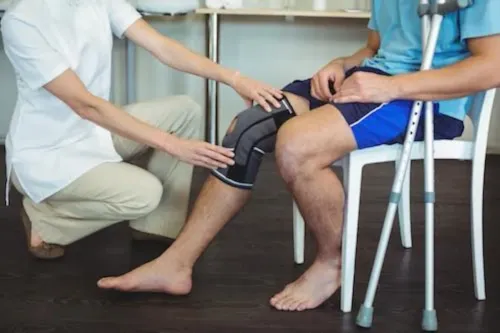
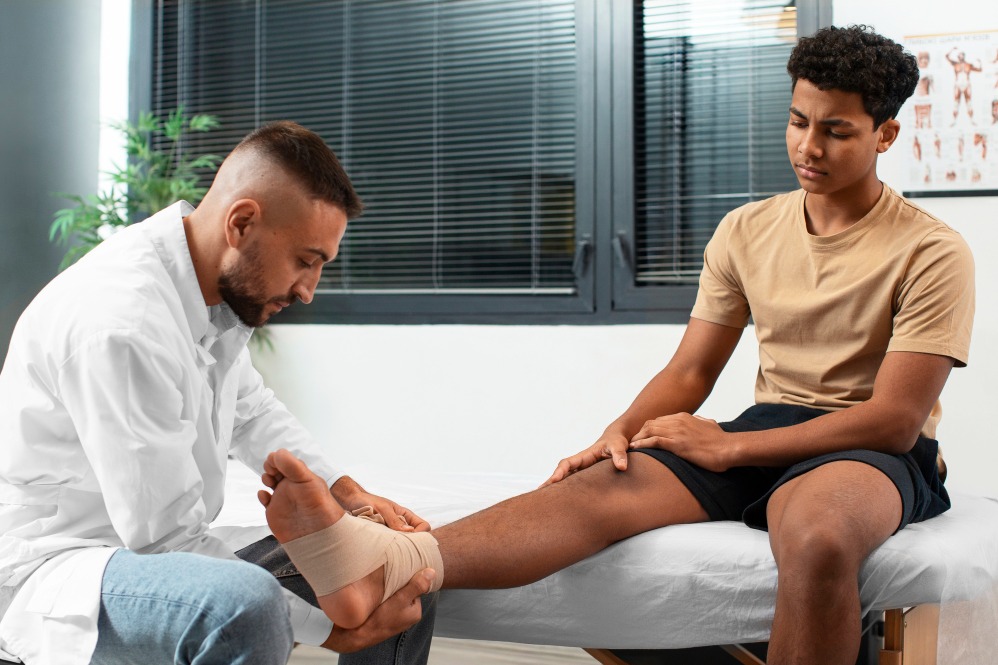
After fixation of the hip, femur, knee, leg, ankle, or foot, rehabilitation may focus on:
- Hip, knee, and ankle movement.
- Thigh and calf strength.
- Balance.
- Transfers.
- Walking with aids.
- Weight shifting.
- Stairs.
- Footwear.
- Gradual return to outdoor walking.
Lower-limb rehabilitation often progresses from protected mobility to independent walking and functional activity.
Pain and Swelling Management
Your physiotherapist may recommend:
- Elevation.
- Rest breaks.
- Gentle circulation exercises.
- Cold therapy according to medical advice.
- Compression if prescribed.
- Appropriate positioning.
- Gradual activity.
- Prescribed medication.
- Avoidance of prolonged dependent positioning.
Some soreness may occur after exercise, but severe, sudden, or progressively worsening pain should be reported.
Home Physiotherapy After Fracture Fixation
Home physiotherapy may be helpful when the patient cannot travel safely or is still significantly restricted.
Home sessions may include:
- Bed mobility.
- Transfers.
- Walking indoors.
- Stair training.
- Use of crutches or a walker.
- Prescribed exercises.
- Swelling management.
- Home-safety assessment.
- Caregiver education.
As healing progresses, clinic-based therapy may be useful for more advanced strengthening, balance, gait, and functional training.
Home Preparation
Before returning home, consider:
- Clear walking paths.
- Good lighting.
- Stable chairs.
- Safe bathroom access.
- Non-slip surfaces.
- A plan for stairs.
- Frequently used items within reach.
- A place to rest and exercise.
- Appropriate footwear.
- Help with meals and household work.
Avoid carrying objects while using crutches unless you have been taught a safe method.
Returning to Work and Daily Activities
Return to work depends on:
- Fracture location.
- Healing progress.
- Pain and swelling.
- Weight-bearing or lifting restrictions.
- Walking ability.
- Job demands.
- Need to climb stairs.
- Ability to use the affected arm.
- Safety requirements.
Desk work may resume sooner than work involving prolonged standing, lifting, climbing, driving, or manual labour. Your medical and rehabilitation team should guide the transition.
Returning to Sport
Athletes may need progressive rehabilitation before returning to running, jumping, contact, or competition.
Training may progress through:
- Walking.
- Strengthening.
- Balance.
- Low-impact conditioning.
- Jogging.
- Agility.
- Jumping.
- Direction changes.
- Sport-specific drills.
- Full training.
- Competition after clearance.
Return to sport should depend on bone healing, strength, balance, movement quality, confidence, and medical clearance.
Warning Signs Requiring Medical Attention
Contact your surgeon or seek medical care for:
- Fever or chills.
- Increasing redness, warmth, or wound discharge.
- Wound opening or persistent bleeding.
- Sudden severe pain.
- Rapidly increasing swelling.
- New numbness or weakness.
- Pale, blue, or unusually cold fingers or toes.
- Loss of movement.
- Sudden inability to bear weight.
- Severe calf pain or swelling.
- Damage to a cast, brace, or external fixator.
- Chest pain or unexplained breathlessness.
- Repeated falls.
- Sudden change in limb position or appearance.
These symptoms may indicate infection, circulation problems, nerve involvement, clotting, hardware complications, or loss of fracture alignment.
Common Mistakes to Avoid
- Putting weight on the limb too early.
- Lifting before clearance.
- Removing a brace, cast, or boot without advice.
- Performing forceful stretching.
- Ignoring swelling or skin changes.
- Using walking aids incorrectly.
- Applying heat over a healing wound.
- Returning to sport too quickly.
- Carrying heavy objects while using crutches.
- Copying another patient’s exercise programme.
- Stopping rehabilitation once basic movement returns.
- Comparing recovery with another patient.
Frequently Asked Questions
What is fracture fixation?
Fracture fixation is a surgical method of stabilising broken bone fragments with devices such as plates, screws, pins, wires, or rods.
When should physiotherapy begin after fracture fixation?
Timing depends on the fracture, surgery, wound, fixation, medical condition, and surgeon’s instructions. Early rehabilitation may include safe positioning, circulation exercises, movement of permitted joints, transfers, and walking-aid training.
Can physiotherapy improve stiffness after fracture surgery?
It may help restore movement and reduce functional stiffness when exercises are introduced safely and progressed according to healing.
When can I put weight on the operated limb?
Only when your surgeon or physiotherapist confirms that weight-bearing is safe. The timeline varies considerably between fractures and procedures.
Can I receive physiotherapy at home?
Home physiotherapy may be appropriate when travelling is difficult or unsafe. Clinic treatment may later be useful for advanced strengthening, balance, and return-to-work or sport training.
How long does fracture rehabilitation take?
Recovery depends on the bone involved, fracture severity, fixation, healing, age, general health, complications, and rehabilitation participation. Some patients improve over weeks, while others require several months.
Can I return to sport after fracture fixation?
Many patients return to sport, but the timing depends on bone healing, strength, balance, movement quality, confidence, and medical clearance.
Why Choose Physionyx?
At Physionyx Physiotherapy & Rehab in Green Park, South Delhi, fracture-fixation rehabilitation is personalised according to the fracture, surgical procedure, healing stage, precautions, mobility level, and daily goals. Dr. Niraj Kumar may combine therapeutic exercise, joint mobility, strengthening, balance training, gait rehabilitation, functional practice, and home-exercise guidance.
The aim is to help patients restore safe movement, rebuild strength, regain independence, and return gradually to work, exercise, and daily life.
Book an Assessment
If fracture fixation has affected your movement, strength, walking, balance, or independence, contact Physionyx Physiotherapy & Rehab in Green Park, South Delhi. A personalised assessment can help clarify your rehabilitation priorities and safe next steps.
Keywords