Can Physiotherapy Prevent Stiffness After Surgery?
Introduction
Yes, physiotherapy may help reduce the risk of stiffness after surgery, but it cannot guarantee that stiffness will not occur.
Surgery, pain, swelling, protective immobilisation, scar tissue, and reduced activity can all limit movement. A carefully planned physiotherapy programme helps introduce safe movement, maintain flexibility, rebuild strength, and gradually restore normal function. Early movement is helpful only when it is appropriate for the specific surgery and approved by the treating medical team.
Why Stiffness Can Develop After Surgery
Stiffness may develop when a joint or body part is not moved normally for a period of time. Common contributing factors include:
- Pain and swelling.
- Keeping the joint still for too long.
- Wearing a sling, brace, or cast.
- Scar tissue formation.
- Muscle weakness.
- Fear of movement.
- Surgical restrictions.
- Previous stiffness before surgery.
- Complications during healing.
- Inconsistent rehabilitation.
Stiffness does not always mean that something has gone wrong. Some movement restrictions are intentionally required to protect a healing tendon, ligament, bone, or surgical repair.
How Physiotherapy May Help
Safe early movement
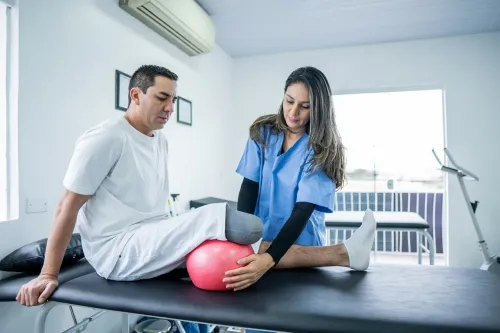
A physiotherapist can identify which movements are permitted and which should be avoided. Depending on the surgery, early treatment may include gentle joint movement, breathing exercises, circulation exercises, hand or foot movements, bed mobility, or walking with support.
The aim is to reduce avoidable inactivity without placing excessive stress on healing tissue.
Improving range of motion
Specific mobility exercises may help maintain or gradually restore movement. The exercise selection depends on the body part, procedure, healing stage, and surgeon’s restrictions.
Forcing a joint beyond its safe range can increase pain and swelling. Controlled progression is generally more appropriate than aggressive stretching.
Managing pain and swelling
Pain and swelling can cause protective muscle guarding, making movement more difficult. Physiotherapy may include positioning advice, movement modification, prescribed exercises, and other clinically appropriate methods to help patients participate more comfortably in rehabilitation.
Preventing muscle weakness
When a person avoids using an operated limb, the surrounding muscles may weaken. Appropriate muscle-activation and strengthening exercises can help maintain support around the joint and improve movement control.
Strengthening should be introduced at the correct stage. It is not always suitable immediately after surgery.
Restoring functional movement
Rehabilitation should connect exercise with daily activities. A physiotherapist may help patients practise:
- Walking.
- Standing and sitting.
- Climbing stairs.
- Reaching.
- Dressing.
- Transfers.
- Lifting.
- Work-related movements.
- Sport-specific tasks when appropriate.
Functional practice can help patients regain confidence while reducing compensatory movement patterns.
Does Physiotherapy Prevent All Stiffness?
No. Physiotherapy cannot prevent every case of post-operative stiffness.
Stiffness may still develop because of the type of surgery, tissue healing, infection, scar formation, prolonged immobilisation, complications, or individual medical factors. Physiotherapy may help reduce preventable stiffness and improve movement, but the outcome varies from person to person.[aujmsr]
A patient should not compare their recovery with someone else’s. Different procedures require different movement restrictions and rehabilitation timelines.
When Should Physiotherapy Begin?
The correct time depends on the surgery and the surgeon’s protocol. Some patients begin physiotherapy during the hospital stay or within the first few days, while others need a protected period before specific movements are started.
The first session may focus on:
- Reviewing the surgery and precautions.
- Checking pain and swelling.
- Assessing safe movement.
- Teaching basic exercises.
- Training with crutches or a walker.
- Advising on positioning and daily activities.
- Creating a home programme.
Early rehabilitation does not necessarily mean intensive exercise. In many cases, it means beginning the right amount of movement at the right time.
Exercises Used After Surgery
Exercises vary according to the procedure. A physiotherapist may prescribe:
- Breathing exercises.
- Ankle pumps.
- Hand and wrist movements.
- Gentle muscle contractions.
- Supported range-of-motion exercises.
- Passive or active-assisted movement.
- Walking practice.
- Progressive strengthening.
- Balance exercises.
- Functional training.
Do not begin exercises from a general online video without checking whether they are suitable for your surgery.
Factors That Can Delay Recovery
Recovery may be slower when patients:
- Remain inactive for long periods.
- Skip prescribed exercises.
- Increase activity suddenly.
- Ignore increasing pain or swelling.
- Stop using support too early.
- Return to heavy work or sport prematurely.
- Use incorrect exercise technique.
- Avoid all movement because of fear.
- Miss follow-up appointments.
- Do not communicate changing symptoms.
Rehabilitation requires balance. Too little movement may contribute to stiffness, while too much loading may irritate healing tissue.
What Patients Can Do at Home
Patients can support recovery by:
- Following surgical precautions.
- Completing the prescribed home programme.
- Moving regularly within the permitted limits.
- Changing position safely.
- Using walking aids or braces as advised.
- Managing activity and rest.
- Monitoring swelling after exercise.
- Attending follow-up appointments.
- Asking before progressing an exercise.
- Reporting unusual symptoms promptly.
Home exercises should be consistent but should not be treated as a substitute for medical review when symptoms are worsening.
Physionyx Approach to Post-Surgical Rehabilitation
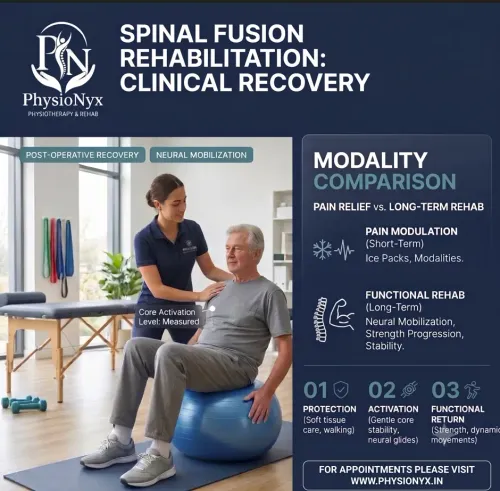
At Physionyx Physiotherapy & Rehab in Green Park, South Delhi, post-surgical rehabilitation can be planned according to the patient’s procedure, symptoms, movement limitations, strength, medical history, and recovery goals.
An assessment may include:
- Joint movement.
- Pain and swelling.
- Muscle activation.
- Strength.
- Balance.
- Walking or functional movement.
- Daily activity limitations.
- Home-exercise ability.
- Work and activity requirements.
Treatment may include therapeutic exercise, mobility training, progressive strengthening, gait training, balance work, functional rehabilitation, manual techniques where clinically appropriate, and home-exercise guidance.
Physionyx describes its rehabilitation approach as personalised and assessment-led. Dr. Niraj Kumar’s listed qualifications include an MPT in Neurology, with experience in rehabilitation and functional recovery.[physionyx]
When to Seek Medical Advice
Contact your surgeon or medical team if stiffness is accompanied by:
- Sudden severe pain.
- Rapidly increasing swelling.
- Fever.
- Wound discharge or increasing redness.
- New numbness or marked weakness.
- Sudden loss of movement.
- Severe calf pain or swelling.
- Chest pain or sudden breathlessness.
Do not attempt to force movement or intensify exercises when these symptoms are present.
Frequently Asked Questions
Can physiotherapy completely prevent stiffness after surgery?
No. Physiotherapy may reduce the risk of avoidable stiffness and support movement, but it cannot guarantee complete prevention. Surgical factors, healing, immobilisation, and individual health can influence recovery.
Is stiffness normal after surgery?
Some stiffness may be expected, especially during the early recovery period. However, severe, worsening, or persistent stiffness should be discussed with your surgeon or physiotherapist.
Is early physiotherapy always better?
Not necessarily. Early rehabilitation can be helpful when medically appropriate, but some surgeries require protection before certain movements or strengthening exercises begin.
Can I stretch aggressively to reduce stiffness?
Aggressive stretching may irritate healing tissues or increase swelling. Stretching should be prescribed and progressed according to the surgery and recovery stage.
What if exercises increase my pain?
Tell your physiotherapist. The exercise may need to be modified, reduced, or temporarily stopped. Severe or worsening pain may require medical assessment.
How long does post-surgical stiffness take to improve?
The timeline varies according to the procedure, severity of stiffness, healing, medical history, and consistency with rehabilitation. Your physiotherapist can assess your progress and adjust the plan.
Can home physiotherapy help?
Home physiotherapy may be useful when travelling is difficult or when the home environment affects safety. The appropriate setting depends on your condition and rehabilitation needs.
Physiotherapy for Post-Surgical Stiffness in New Delhi
Physiotherapy may help prevent avoidable stiffness after surgery by combining safe movement, symptom management, muscle activation, progressive strengthening, and functional rehabilitation.
If you are searching for post-surgical physiotherapy in New Delhi, South Delhi, or Green Park, Physionyx Physiotherapy & Rehab can assess your condition and create a rehabilitation plan based on your procedure and medical advice.
Physionyx Physiotherapy & Rehab
Green Park, New Delhi
Phone: +91 99116 63263
Book an Appointment With Us Visit www.physionyx.in
This article is for general education and does not replace advice from your surgeon or physiotherapist.
Keywords